hacklink hack forum hacklink film izle hacklink chicken roadbetsmovejojobetbetasusbetsmoveSpincoStreameastjojobetHiltonbetalobetZ-Librarybetzulaartemisbetartemisbetjojobet girişjojobet girişjojobet girişjojobetjojobetjojobetultrabetcasibomjojobet girişartemisbetartemisbetcasibom girişcasino siteleritipobet

Author: Neel

  • Characteristics of Successful Sustainable Fishery Initiatives

    Over the past six years, Wilderness Markets has assessed sustainable fisheries investment opportunities in more than fifteen different wild capture fisheries worldwide. Our specific objective is defining how to make conservation-based approaches a viable financial alternative to current wild capture fishing practices.

    We have enjoyed working with numerous international and national partners on field assessments, desk reviews and systemic fishery improvement project (FIP) assessments. Much of our public work and partners can be reviewed at this link.  Fisheries assessed ranged from the United States, Mexico, Indonesia, the Dominican Republic, Grenada, Guyana, Chile, and four Caribbean-wide fisheries. Along the way, we have also reviewed a number of fisheries in Africa.

    Behind these public reports are a series of financial models we created to quantify the viability of alternatives considered in different fisheries. These models move beyond the scientific and policy recommendations associated with fishery reform to account for the financial implications associated with existing or proposed measures. These models weigh the financial costs and benefits of changes in management, data collection and use, infrastructure and capacity development in the context of existing value chains and markets. 

    Whereas others have ably demonstrated the potential upside associated with fisheries reform through significant economic modeling,[1]and others have documented key characteristics of FIPs,[2] we have focused on how and where the specific financial benefits may be realized in a value chain. We identify how the “upside” may be used to compensate for the costs of fisheries reform and improvement such as gear change, improved management, etc. Our focus has been on the financial implications for fishery participants, especially fishers.

    Through our work and others’, the variables listed below have been identified as having a direct impact the financial viability of fisheries reform. These five variables have been examined across a range of fisheries and found to be consistent. It is important to note that these operate in the context of sustainable fishing interventions, most likely in a “parallel” model.

    • Product value 
    • Stock recovery cycle[3]
    • Infrastructure Access[4],[5]
    • Supply chain length[6], [7]
    • Organizational homogeneity and capacity[8]

    These variables are focused specifically on the potential likelihood of securing the financial incentives necessary to address the costs of fisheries reform or improvements, i.e., ability to pay for conservation measures through the improved value of the fishery. These benefits may then be utilized to justify reform or directly support sustainable fishing practices.  


    The priority quantitative variables that have a direct impact on the financial equation are:

    Product Value 

    Value refers to not only the price of the seafood, but also to the margin retained by the participant in the value chain, whether fisher, first receiver or processor. This is a combination of the price, operational capacity, input costs and volumes associated with a participant. 

    Products handled by participants capable of securing comparatively high value in seafood markets were found to be more capable of absorbing the incremental costs associated with fisheries reform and conservation focused measures. Lower value products – either due to the inherent value of the stock, low volumes, operational inefficiency or poor capacity leading to low margins are less likely to be viable. The willingness of participants to engage in changes in practices such as gear change and harvest control regulations, is directly proportional to the value generated by the seafood product and realized by the participant. 

    Stock Recovery Cycle

    Life cycles, fecundity, biomass levels, fishing effort mortality, predation and habitat health are all critical components in defining the costs of conservation related measures. Short recovery cycles reduce the wait time to realize benefits in a fishery, capping social, political and financial costs associated with fisheries reform. 


    The primary qualitative factors that influence the financial equation are:

    Infrastructure Access

    Domestic and global supply chains require sanitary and safe foods, therefore access to appropriate storage and transport is a significant driver of product quality and value. In seafood, this typically means access to HACCP compliant facilities able to reliably provide clean ice, cold storage and timely transportation. The absence of these factors negatively impacts value.

    This variable is routinely exploited by supply chain participants (including well meaning development organizations) to attempt to integrate new products into global and domestic supply chains. Unfortunately, negative social and environmental consequences are not always considered by these participants, nor is there typically a simple mechanism for integrating or compensating fishers or others for improvement costs. 

    Supply Chain Length

    Supply chain length includes both the geographic distance and the number of participants “touching” a product in the supply chain. Extensive travel distances between points of harvest and market drive up costs of transportation, ice and storage, and lead to product deterioration. Each “middleman” in the supply chain adds handling and cost margins to the product. While these costs may be absorbed by the end market, long supply chains decrease the likelihood of compensating those bearing the cost of fishery reform and improvement, usually fishers. 

    Organizational Homogeneity and Capacity

    When considering artisanal and small scale fisheries, community cultural homogeneity has been identified as a critical component of community based fisheries management and reform efforts. Successful efforts are entirely dependent on alignment around goals[9], which is easier to achieve in geographically remote, culturally homogenous communities. Regardless of the financial upside, heterogenous community efforts close to major cities are challenging. 

    At the corporate level, strong leadership and the ability to effectively respond to market signals has been well documented in value chain literature and in pilot projects we have tested.

    At its base level, the presence of a functioning investable entity is a significant advantage in successfully addressing the characteristics identified above. 


    Based on our review of a range of different fisheries, the above characteristics have a significant impact on the success or failure of sustainable fisheries initiatives, particularly in emerging market contexts where the financial and social implications of fisheries reform are often ignored by the conservation community.

    Unless these factors are integrated into projects aimed to curb overfishing, conservation efforts are unlikely to succeed and the unsustainable status quo is likely to continue.

    We welcome your comments, thoughts and views on the above.

    [1]Costello C, Ovando D, Clavelle, T, Strauss, K, Hilborn, R, Melnychuk, M, Branch, T, Gaines, S, Szuwalski, C, Cabral, R, Rader, D, and Leland, A. (2016). Global fishery prospects under contrasting management regimes. Proceedings of the National Academy of Sciences.113. 201520420. 10.1073/pnas.1520420113. 

    [2]https://www.ceaconsulting.com/wp-content/uploads/Global-Landscape-Review-of-FIPs-Summary.pdf

    [3]http://investinvibrantoceans.org/wp-content/uploads/documents/Executive_Summary_FINAL_rev_1-15-16.pdf

    [4]Anderson J, Anderson C, Chu J, Meredith J, Asche F, Sylvia G, et al. (2015) The Fishery Performance Indicators: A Management Tool for Triple Bottom Line Outcomes. PLoS ONE10(5): e0122809. https://doi.org/10.1371/journal.pone.0122809

    [5]Basurto X, Bennett A, Hudson Weaver A, Rodriguez-Van Dyck S, and Aceves-Bueno J-S. 2013.

    Cooperative and noncooperative strategies for small-scale fisheries’ self-governance in the globalization

    era: implications for conservation. Ecology and Society. 18. 10.5751/ES-05673-180438.

    [6]Ibid.

    [7]Wilderness Markets. 2016. Connecting the Dots: Linking Sustainable Wild Capture Fisheries Initiatives and Impact Investors.http://www.wildernessmarkets.com/our-work/connecting-the-dots/

    [8]McCay BJ, Micheli F, Ponce-Díaz G, Murray G, Shester G, Ramirez-Sanchez S, and Weisman, W. (2014). Cooperatives, concessions, and co-management on the Pacific coast of Mexico. Marine Policy,44,49–59. doi:10.1016/j.marpol.2013.08.001. 

    [9]Csaky, Eva (2014) Smallholder Global Value Chain Participation: The Role of Aggregation (PhD Dissertation, Duke University)

  • Is Losing the Amazon Inevitable?

    Is Losing the Amazon Inevitable?

    As the Amazon burns, and the world responds, this might be a good time to reflect on some of the key drivers of this tragedy.

    Three major trends have combined to create the conditions that make it almost inevitable that the forest would be burned.

    • Global population increase & increased global middle class
    • Tragedy of the commons
    • Lack of a viable alternative to developing the Amazon

    Plenty of ink has been spilt on the first two trends. Populations continue to increase around the globe, with Brazil’s alone increasing from 72 million in 1960 to over 209 million in 2017 according to the World Bank, an increase of almost threefold. At the same time, GDP per capita has risen from $205 in 1960 to $9,812 in 2017. These increase are mirrored around the world, particularly in emerging markets.

    The tragedy of the commons has meant that rainforest areas like the Amazon in Brazil and tropical rainforests in countries like Indonesia have been an easy target for both small scale and industrial scale producers of soy, wheat, beef and palm oil.

    Global demand for cheap beef, soy, wheat and palm oil– which we in the west are as guilty of driving – provides the markets for these products and the incentive to destroy these natural ecosystems, despite their value as “the lungs of the world”.

    Which brings us to the third trend – there is no value in conservation for the people living in these countries. Now that we’ve deforested the north (as the Brazilian President put it), we are dependent upon the south for these ecosystem services. However, despite the many millions of dollars spent on conservation related activities, conservation of these natural resources is simply not a viable alternative to deforestation. In all our modeling for wild capture fisheries, we often find that the costs of conservation increase production costs over and above what the “market” will pay, and that the majority of these costs fall on producers – who face the choice of complying, and potentially going out of business, or finding other markets for their product.

    In deforestation, as in wild capture fisheries, as long as there is no way to recognize the resource as an asset, and to provide a realistic payment for ecosystem services provided by those assets, it is unlikely we will ever save the Amazon – or, for that matter, any wild ecosystem, including wild capture fisheries.

    The sooner we recognize the need to develop viable assets that provide realistic payments for ecosystem services to incentivize maintenance of priority ecosystems, the sooner we will secure their future.

  • Fisheries Improvements & Social Impacts

    Fisheries Improvements & Social Impacts

    Many years ago, when I was a hotel manager at a resort in a national marine park, I was roundly castigated for employing poachers as guards and fishermen as boat operators for our visitors. The prevailing sentiment was one of enforcement to protect the national marine park – and the expulsion of the local people. While we had made significant strides in improving enforcement, the local people were facing a social challenge – they had no alternatives. 

    The recent Interim Policy on Forced Labor, Child Labor, or Human Trafficking by Fisheryprogress.org is a reminder of the challenges the seafood conservation community is facing in the 21stCentury. It is an important step forward for Fisheries Improvement Projects which seek to secure seafood sustainability and it is encouraging to note the role of Conservation International (CI) in developing the Social Responsibility Assessment Tool for the Seafood Sector (full disclosure – I am a former employee of CI). However, I would propose that while it is essential to know that we are “doing no harm” we also need to understand the implications of the decisions inherent in effective FIPs and need to ensure that fishery participants either have a stake in the upside or have an alternative source of income.

    Fisheries Improvement Projects (FIPs) have historically focused almost entirely on environmental metrics to date. One of the central issues associated with effective FIPs relates to good governance of the fishery. While there are a myriad of issues associated with “good governance”, I would propose that the willingness of local leaders and harvesters to adopt less impactful fishing practices is directly proportional to their financial gain and  / or to their alternative opportunities. 

    In most of the FIPs we have reviewed or surveyed, there is no mechanism for harvesters to secure any hypothetical “upside” and they have woefully few alternative opportunities. They simply have no way of adapting to the changes – a factor that remains unaddressed in the current FIP framework. Faced with this, is it any surprise that national and local governments are slow to enforce environmentally appropriate regulations? 

    So, while we congratulate Fisheryprogress.org on this step forward, it is important to keep the broader picture in mind – in an era of dwindling fish stocks, growing populations, fragmented global markets and populist leaders, the likelihood of “environment only” or “no negative” approaches succeeding in restoring fisheries is slim to none – and risks being passed as irrelevant. The sooner we can begin to address the social and financial implications of seafood sustainability, the sooner we will see these initiatives succeed. 

    Oh – and that marine park? Watamu Marine National Park and its numerous supporters continue to develop innovative solutions to turtle conservation and marine protected areas.

  • IPBES global report: Species extinction rate is accelerating

    This recently released report makes for sobering reading for all.

    One of the key challenges we will all face is how to address the challenge of climate change, environmental conservation, poverty and population. Focusing exclusively on environmental impacts and ignoring the financial and social impacts is not only sustainable, but counterproductive to achieving environmental objectives.

    This is why we are working with a range of stakeholders to develop and test “triple impact FIPs” that address not only the environmental outcomes, but also the social and financial outcomes of the participants in global seafood supply chains.

  • Blue Star Foods initiative shows 3BL efforts work

    Blue Star Foods initiative shows 3BL efforts work

    lead firm crab
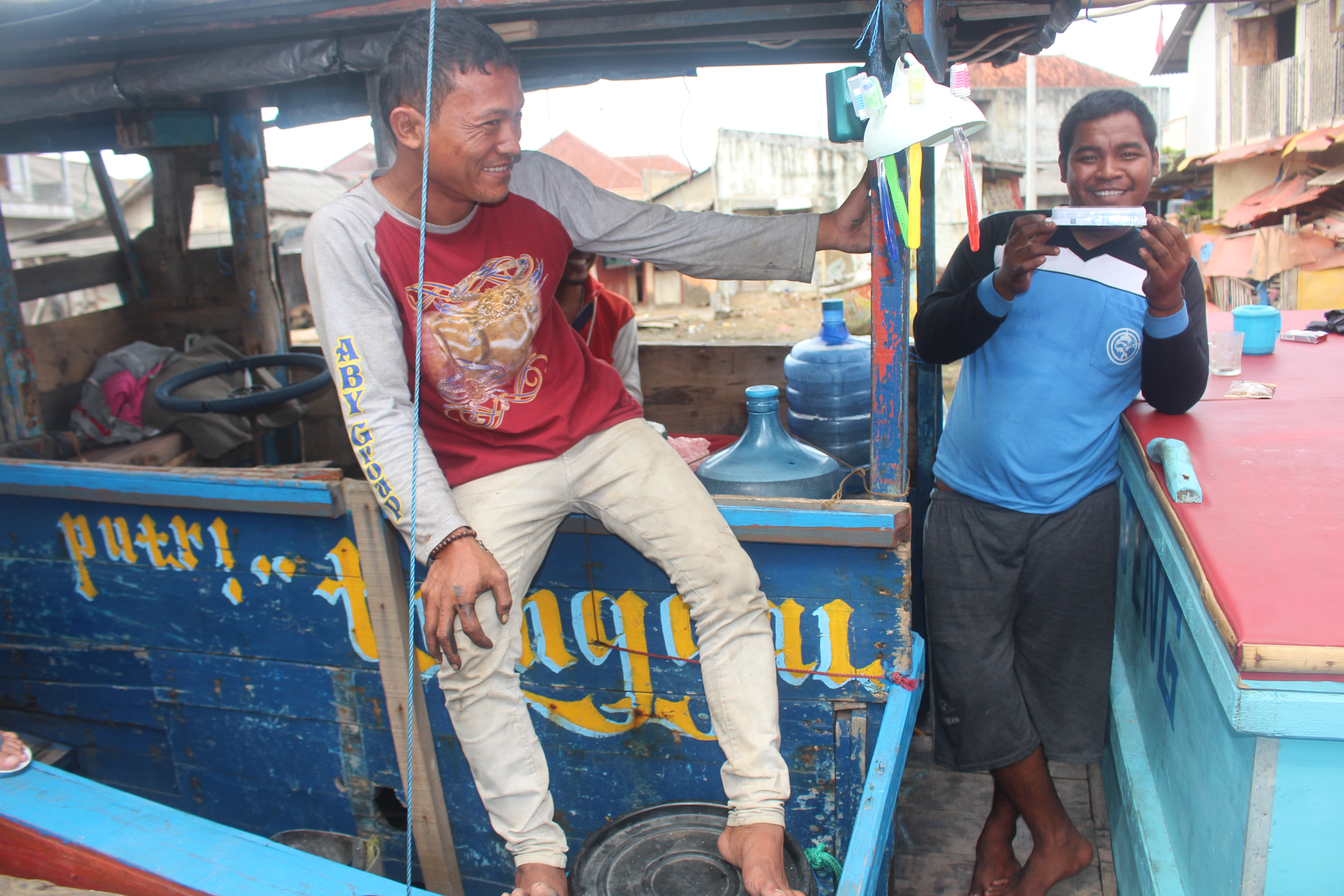
    BSC fisherman with new vessel tracking device

    Blue Star Foods, the Miami, Florida based seafood specialist, is proving that it is possible to have a sustainable and profitable business in the seafood industry.

    The title of a recent article posted on Under Current News sums it up: Blue Star Foods’ founder sees ‘3BL’ effort resonating more with crab buyers.

    In 2015, Blue Star Foods partnered with Wilderness Markets to develop their Triple Bottom Line (3BL) strategy. The company wanted to design and implement appropriate financial and social incentives to enable fishermen in their supply chain to transition faster to sustainable fishing practices. Through its purchasing power and relationships, Blue Star was in a strong position to influence the practices of a range of processors who have commercial relationships with a network of mini-plants, collectors, and fishermen. We designed and tested a pilot initiative in one site in Indonesia, which has since been expanded.

    Triple bottom line refers to the idea of pursuing environmental, economic, and financial goals simultaneously. Our work often centers around the research and data collection needed to modify or create a value chain that fosters this model with existing practitioners.

    “We chose to work with Wilderness markets to develop our 3BL strategy because of their experience with impact investing AND expertise with wild-caught fisheries. That foundational work has made implementation a success.”— John Keeler, Executive Chairman & CSO, Blue Star Foods

    For Blue Star Foods, our work helped the company originate, design and develop the strategy (find the report in more detail here).

    They have implemented it with vigor, and it’s paying off.

    After only two years, they are seeing progress in the sustainability of blue swimming crab fisheries in Indonesia and have expanded their efforts to include the Philippines. In the process, these sustainability practices are positively impacting the social well being of harvesters and workers, and improving sales to more large-scale foodservice, retail and institutional buyers.

    Read the article to learn more about the impact Blue Star Foods has seen and how companies may integrate the benefits of developing and implementing 3BL strategies.

  • Dr. Richard Leakey – Presentation on Conservation

    Dr. Richard Leakey recently presented some thoughts on conservation in Cape Town at the 2017 Conservation Lab.

    He made some excellent comments regarding the current and future challenges of conservation in the age of climate change, population growth and prosperity that need to be incorporated into many Conservation NGO strategies and agendas (particularly in fisheries).

    I hope you enjoy it as much as I did – its worth the time.

  • Is this what success looks like?

    An ongoing discussion between people in the conservation finance community is how we define success.

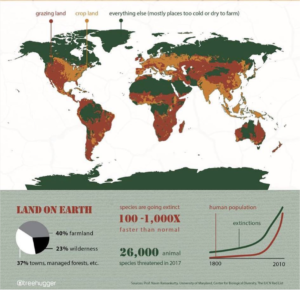
    Reviewing the data – which we like to do (see below) – does not demonstrate much success in addressing species or biodiversity loss.

    Perhaps it is time for a review of what has really worked in the conservation finance. Not only do we need to contend with increasing resource demand and population growth, but now we have to increasingly address the impacts of climate change on these less than resilient ecosystems.

    If this is what success looks like, I would hate to see failure.

    Image Courtesy of Treehugger & Racing Extinction

  • Investing in sustainability – the role of intangibles

    “Early in the twenty-first century, a quiet revolution occurred. For the first time, the major developed economies began to invest more in intangible assets, like design, branding, R&D, and software, than in tangible assets, like machinery, buildings, and computers. For all sorts of businesses, from tech firms and pharma companies to coffee shops and gyms, the ability to deploy assets that one can neither see nor touch is increasingly the main source of long-term success[1]”.

    Rated as one of the Financial Times Best Books of 2017, Capitalism without Capital is a useful and timely read as we consider sustainability based investment broadly, and sustainable wild capture fisheries specifically. It goes a long way to explaining and addressing one of the many challenges the sustainability community faces when evaluating and considering how to transition “projects” to enterprises.

    Wilderness Markets and others have made considerable progress in identifying, developing and deploying appropriate due diligence questions to address investment risk as well as developing appropriate business plans and models, most recently in wild capture fisheries (with the World Bank). However, these criteria either ignore or assume the presence of effective intangible development capacity which is seldom the case with most natural resource “projects” nurtured by NGO’s and many communities. These “projects” often lack both the human and intellectual capital to effectively develop and grow businesses, leading to an over emphasis on tangible assets.

    Yet, as is clearly defined in this book, this is where significant value is to be gained. In the abscense of effective design, branding, R&D and software, the likelihood of enterprise success is marginal, seldom providing the risk adjusted returns investors would like to see.

    The social implication of this trend are also discussed in the book. It provides good perspective on how inequality is both a result and a cause of this investment trend, resulting in a negative vicious cycle. Applying equally to groups and individuals, in both developed and developing markets, participants are unable to upgrade skills due to economic challenges (or an overreliance on tangibles), thus depriving them of the resources needed to upgrade their skills. We have seen this in fisheries in the United States, Mexico and Asia.

    Intangibles also have significant implications regarding the appropriate types of capital to be deployed. Given the nature of intangibles – identified as the 4 S’s (scaleability; sunkenness; spillovers and synergies), these types of investment are more appropriate to equity than to debt, which has implications on the recently launched debt funds in sustainable fisheries and oceans.

    As we and others continue to evaluate and explore how best to attract private capital to a range of sustainability markets, this book provides good perspective on an important topic.

    [1] Jonathan Haskel & Stian Westlake, Capitalism without Capital; The Rise of the Intangible Economy, Princeton University Press 2017

  • The Finance Gap in Sustainable Wild Capture Fisheries

    Over the past few years, three broad strategies have evolved to address the challenge of achieving sustainable wild capture fisheries. These consist of:

    • Addressing governance, regulation and policy
    • Providing preferential access to markets via certification mechanisms and Fishery Improvement Plans
    • Aggregating mission aligned capital

    While each of these strategies have merits in and of themselves, they function best if their implementation is aligned, particularly in emerging markets where parallel or consolidated approaches are more likely to succeed than a serial approach. The implementation of these three strategies independently of each other often result in distortions that misalign incentives. As a consequence, this lack of alignment has resulted in few real world business examples or models that can effectively scale across fisheries, geographies and communities. Despite the attractiveness of economics of fisheries reform in at a macro level, the financial implications for practitioners in the real world have been challenging.

    We especially note the development of mission aligned capital for sustainable fisheries in the past year. The Althelia Sustainable Oceans Fund and the Rare Meloy Fund are now either operational, or close to being operational. These new facilities represent important progress in this space.

    While these represent important steps forward, they do not, as of yet, address the demands of current market conditions, particularly in emerging markets. Based on our field assessments in Asia, Latin America, parts of Africa and the United States, the reality is that the majority of the demand lies in defining, developing and testing sustainable fisheries instruments and models that may, one day, be eligible for the Meloy Fund or the Oceans Fund.

    One sequence of fund development is to a) prove a concept, b) grow and refine and c) to deploy large scale capital (courtesy of Dalberg Global Advisors).

    1. Prove the concept – at this stage, practioners are testing financial instruments and models in a variety of settings with a wide variance of risk – returns and a great deal of tail risk. Transactions are often small, with high transaction costs, and with limited to no track record. While the Meloy Fund may most closely approximate these characteristics, the Funds requirements and relatively high return requirements and minimum transaction sizes remain a mismatch for the sector.
    2. Grow and Refine – at this stage, practioners are aggregating small scale proven models into larger vehicles; allocating and pricing risk appropriately; have a track record to demonstrate risk returns and an experienced team.
    3. Deploy Large Scale Capital – at this stage, practitioners are able to deploy large pools of institutional capital towards proven concepts; have more stable returns with lower tail risks and lower transaction costs as well as strong comparable track records for the sector and fund managers.

    Based on our reviews, in the absence of financial instruments and model with documented and understandable risk, the sustainable wild capture fisheries sector appears to have a significant funding gap at the “Prove the Concept” stage. Resources are required to define these instruments and models, ideally with existing sector participants, many of whom are searching for approaches to transition NGO driven projects to investable entities with very limited success to date.

    In reality, there is a significant pool of potential projects in the form of Fishery Improvement Plans, fishery projects, blue economy projects and alternative livelihood projects in many geographies. While Wilderness Markets has developed a systematic analysis of the potential investment opportunities in a number of fisheries, we have been struck by the rather random approach to this challenges and the lack of resources to systematically support the transition to investable entities that may, one day, be eligible for investment from the Meloy Fund or the Oceans Fund.

  • A “Second Notice” to Humanity

    Over 15,000 scientists from around the world have issued a somber notice to humanity. As they state:

    “Humanity has failed to make sufficient progress in generally solving these foreseen environmental challenges, and alarmingly, most of them are getting far worse,” they write. (Our emphasis added).

    We encourage a close reading of the paper, if only for the graphs.  The 25 year graphs provide important context.

    If many companies saw these trend lines for their expenses or risk factors, we assume they might react. But  society as a whole (and the current US administration) has so far generally ignored the implications of these trends.