hacklink hack forum hacklink film izle hacklink chicken roadbetsmovejojobetbetasusbetsmoveSpincoStreameastjojobetHiltonbetalobetZ-Librarybetzulaartemisbetartemisbetjojobet girişjojobet girişjojobet girişjojobetjojobetjojobetultrabetcasibomjojobet girişartemisbetartemisbetcasibom girişcasino siteleritipobet

Author: wilderness-admin

  • Sustainable Fisheries Finance – An Integrated Value Chain Approach (Part 1)

    As our need for the oceans to provide us with food and livelihoods increases, the sustainability of fisheries becomes increasingly vital. One of the key components of fisheries value chain sustainability is the long-term economic sustainability of the fishermen. Without proper conditions to allow organizations to innovate and scale, economic, ecological and social returns are even more difficult to realize.

    Wilderness Markets, with the support of the David and Lucile Packard Foundation and the Gordon and Betty Moore Foundation, undertook a series of fishery value chain assessments to better understand the opportunities and constraints for private impact capital to flow into wild capture fisheries markets

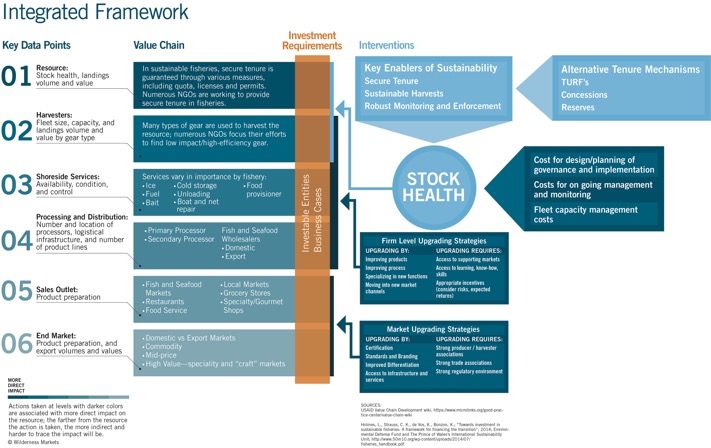
    Over the course of 220 interviews, we assessed four developing country fisheries (DCFs) in two countries and one fishery in the U.S. Each fishery we assessed provided a piece of a larger puzzle, allowing us to identify the components of a sustainable seafood value chain and its relationship to stock health, which in turn, drives value chain health. We present this value chain as an “Integrated Framework” below.

    A number of lessons may be taken from this framework:

    • Stock Health is positively impacted by the “Key Enablers of Sustainability”, but not by value chain interventions.
    • In reality, our findings indicate that in the absence of the Key Enablers, value chain dynamics, no matter how well intentioned, result in higher rates of stock depletion
    • Firm level and market level upgrading strategies are unlikely to result in stock health improvements in the absence of the Key Enablers
    • The majority of Developing Country Fisheries do not have any investable mechanism at the resource level in which to invest
    • The majority of Developing Country Artisanal Fisheries (as opposed to Industrial) are further challenged due to the lack of investable entities and legal recognition of fishers / harvesters, with Shoreside Service (03) providers as the first legally recognized entity in the value chain – not the harvesters (02).

    We will explore what this means (including how Fisheries Improvement Plans or FIPs link into this) in a series of upcoming posts. We welcome your comments and inputs to this discussion.Wilderness Integrated Framework Feb 2016
  • Sustainable Seafood Pipeline Development

    3045742816
    Fishing Net Floats

    During my time at Verde Ventures, the challenge of developing a viable portfolio in sustainable seafood continued to vex us. Despite the challenge and need, we were unable to develop a serious pipeline of high impact transactions, as we had developed in coffee. In fact, despite an internal commitment to place $1 million in sustainable fisheries, we were only ever able to commit $50,000 in 3 years.

    After leaving Verde, I decided I wanted to get to the root of why this was the case. The need is clearly present – with the natural resource clearly under significant threat, with a large segment of many developing country fishery (DCF) populations dependent on the natural resource, and the increased demand for ethically sourced product, surely we could develop a pipeline of deals?

    With the support of the David and Lucile Packard Foundation as well as the Gordon and Betty Moore Foundation, I was fortunate to have the opportunity to assess four fisheries in order to identify and assess the constraints preventing impact capital from accessing this market. At the same time, I was to identify potential investment opportunities, understand their capital requirements prior to finding a match for these requirements.

    Our work took us through the multi-fishery fresh fish value chain from Baja California to the US; Indonesia’s multiple yellow fin and skip jack tuna value chains, the Blue Swimming Crab value chain as well as, California’s Groundfish value chain. These four fisheries were assessed against a common set of frameworks in order to maintain consistency, with an overall focus on USAID Value Chain Analysis and a focus on development and improved economic outcomes for harvesters.

    Our findings, over the past 12 months of field work are sobering. Anyone anticipating the immediate deployment of large sums of high impact capital will be disappointed. While we were able to identify a number of very strong livelihood models and opportunities, these all came with significant environmental costs. The only exception to this was the California Groundfish fishery. None of the DCF were able to provide environmental, social and financial returns based on the simplest models developed in the agriculture value chain impact market.

    The key constraints identified across the fisheries were:

    • Uncertain stock health
    • Lack of investable opportunities at the harvester level
    • Lack of effective aggregation and legal recognition at the harvester level leading to the inability to access adequate financing
    • Lack of access to appropriate / adequate infrastructure
    • Lack of a viable triple bottom line model and business case
    • Lack of market data

    Each of these constraints in and of themselves would be significant issues in any developing world context. The reality is that they all co-exist in developing country fisheries, and combined, make it very difficult to establish and operate any form of small and medium size enterprise that would be acceptable to impact investors. Interventions designed to improve quality – such as refrigeration – require investable entities, a strong business case, organized harvesters with adequate equity and access to markets.

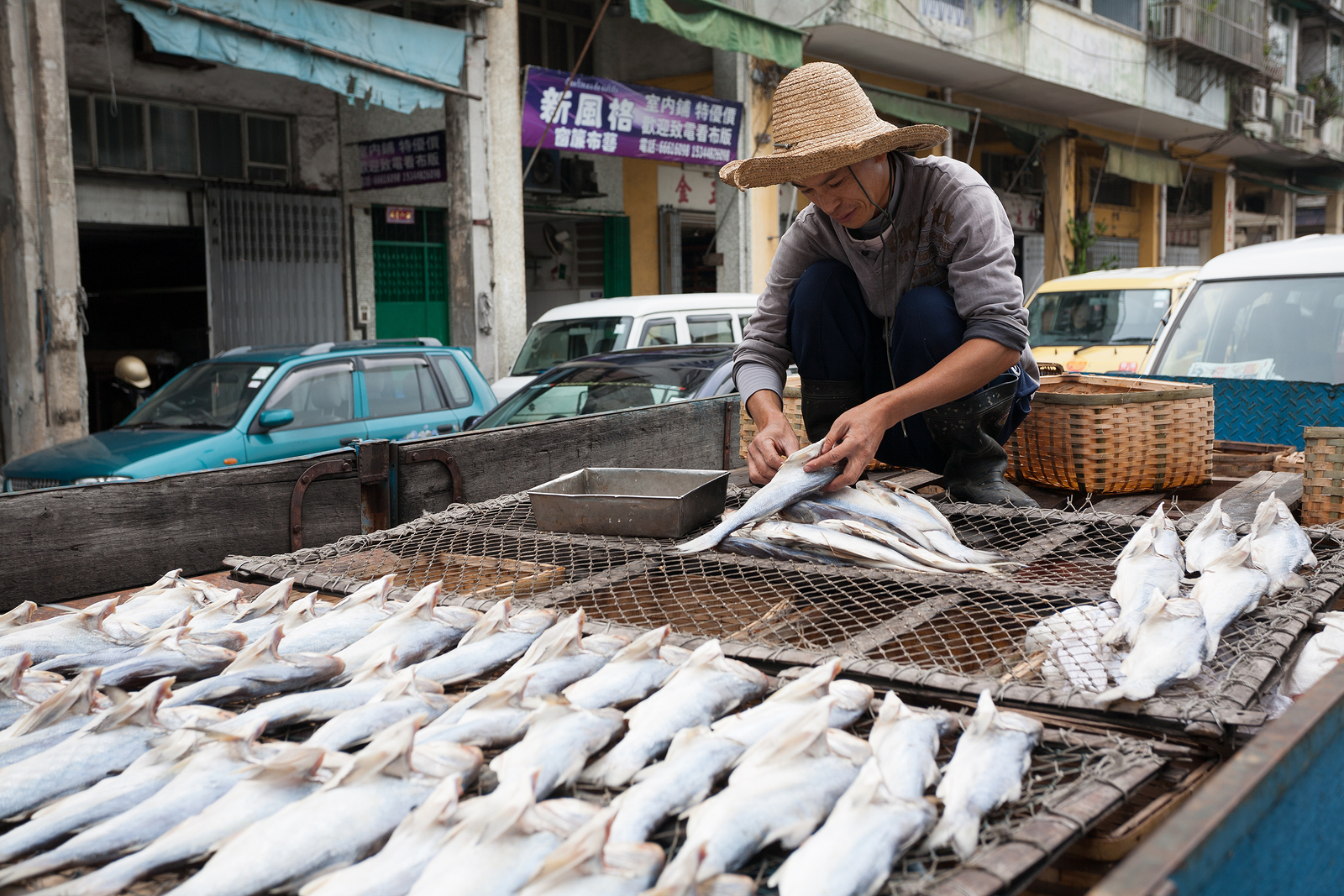
    However, even if all these elements are addressed in any of the assessed fisheries, any investment will almost certainly increase rates of natural resource extraction and impact stock health in open access systems.MACAU Fisherman

    The one example we identified where this was unlikely to be the case was the California Groundfish fishery, where the Federal ITQ system has been designed and implemented to ensure stock health is not negatively impacted by over-exploitation. This is an important step, and has, in our opinion, created the conditions necessary for investors to seriously consider investments in the fishery at multiple levels of the value chain.

    Over the course of the next few weeks, we’ll explore these findings and look at some of the opportunities and solutions identified as a result of these assessments.