hacklink hack forum hacklink film izle hacklink jojobetsahabetchicken roadnakitbahisjojobetgalabetnakitbahisholiganbetgalabetSweet bonanzaStreameastdeneme bonusuCasibomenbetz-lib zlibrary 1lib b-ok websitematbetlunabetbetsmovejojobet girişjojobet girişjojobet girişjojobetbetsmovejojobet girişholiganbet

Blog

  • Improve Data to Improve Sustainability

    Improve Data to Improve Sustainability

    Case Study:
    Developing and Implementing SIMP Compatible Seafood Data Reporting and Traceability System in the Crab Supply Chain

    Problem Statement and Opportunity

    The U.S. implementation of the Seafood Import and Monitoring Program (SIMP)[1] on 1 January 2018 establishes reporting and recordkeeping requirements to prevent illegal, unreported and unregulated (IUU) seafood from entering the U.S. The onus of proof is placed on the importer of record to provide and report key data from harvest to U.S. entry. In geographically diffuse supply chains, like blue swimming crab from Southeast Asia, with thousands of “points of entry”, i.e., fishers, tracking landings to the vessel is far less straightforward than short and narrow supply chains, such as skipjack tuna or sardines. This reporting requirement, while worthwhile, will require U.S. seafood importers to incorporate cost-effective traceability initiatives in their often-complex supply chains.

    There is a growing appreciation that the needs of fishers and their communities must be addressed in order to improve the underlying causes of fishery exploitation in the developing world, particularly for small-scale fisheries. -California Environmental Associates

    The requirement also presents an opportunity to promote resource sustainability through supply chain transparency and catch monitoring. Despite pledges to abide by size limits, U.S. importers of blue swimming crab (BSC) have difficulty ensuring their supply chain partners are buying only crabs larger than the agreed minimum size of 10cm and excluding berried females. The application along with a web-based reporting tool we developed can meet the requirements of the SIMP, as well as the European Catch Documentation (CD) requirements, and elucidate the in-country supply chain. By tracking landings by vessel and by harvester, this tool further provides the opportunity to address key social and environmental outcomes associated with the Sustainable Development Goals[2] (SDGs), which gives seafood importers a mulit-purpose toolkit to both decrease their reporting costs and increase the sustainability of the crab stocks.

    The opportunity to spur social and economic impact should not be underestimated. Educating, engaging and rewarding fishers and communities directly for complying with ecological goals like minimum size, berried females, no-take areas, and more offers an opportunity to engage communities directly in resource management and provide key links to SDGs. Aside from nascent work by Fair Trade[3] and SmartFish[4], there are few fishery sustainability efforts that actually benefit the fishers that form the foundation of many supply seafood chains. Indeed, most efforts impose costs on fishing communities—time, foregone income, capital for new equipment—without providing benefits. Our tool allows identification of compliant fishers, so they can be awarded price premiums and other incentives.

    Supply chain transparency is beneficial to the U.S. importer not only in terms of identifying good actors and meeting reporting requirements, but also gives them an edge in the marketplace full of otherwise opaque supply chains.
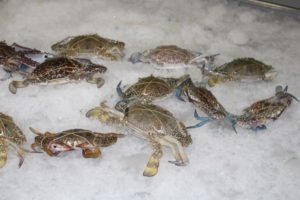
    Provision of ice is a key concern

    Assessment

    When initially considering how to provide BSC supply chain transparency from the ocean to the end buyer, we researched existing options, hoping to find one that could be customized to the supply chain. We conducted a desk review, scouring the internet and our personal network to identify all available options. In total, we reviewed nearly forty systems that provided varying levels of traceability; of these, we interviewed approximately six potential providers that met or came close to our key considerations:

    1. Ease of use – the user interface needed to be easy for data collectors in Indonesia and importers in the U.S. to use
    2. Utility for marketing purposes – a consumer-facing component was a must
    3. Facilitate regulatory compliance – must collect and provide data required by the SIMP and EU CD in a straightforward format
    4. Mapping – needs to provide maps of fishing locations to determine which areas are best for avoiding undersized and berried crabs
    5. Business model – a cost effective and durable business model that did not result in excessive fees or costs to each level of the value chain
    6. Data access, storage and ownership – data must be accessible by multiple parties within the value chain, stored in Indonesia, and owned by the funding company
    7. Reasonable set-up costs – ideally, a system would be compatible with existing software and hardware and would require little in the way of training. A team should be able to begin data collection with a few hours or less of upfront training on the system interface and they should be able to readily convey to the fishers the benefits of the system.
    8. Geographic and cultural relevance – the system needed to function in rural, relatively isolated areas with little to no telecommunications access
    9. Engage Harvesters and Vessel owners in order to build their understanding and the relative importance of adhering to harvest control regulation
    10. Ease of integration – overall, the platform needed to be easy to readily integrate into the supply chain.

    Findings from Assessment

    None of the reviewed systems met the requirements of the lead firm with the exception of the Pelagic Data Systems units for vessel management, i.e., vessel tracking. Due to the cost of acquisition and the relatively high ongoing costs of use, these were installed on a trial basis. This test was not successful, and cheaper, more effective units were identified.

    Development

    Not finding a suitable existing program, Blue Star Foods decided to develop their own application to gather data tied to their marketing goals and objectives around supply chain integrity. The SIMP and EU CD data requirements were integrated into the data collection system. Wilderness Markets worked closely with an app-development team to develop an Android and iOS  application and support the field trials. After the initial field trials, the system was deployed to in-house teams from Blue Star Foods Indonesian partners, consisting of procurement and quality control specialists.

    Implementation and Deployment

    Data was collected at selected mini-plants and landing sites during a six-month period. Both harvesters and data collectors were simply encouraged to log landings during the pilot phase without any indication or reference to IUU or other considerations. They were not penalized or otherwise reprimanded for reporting undersized or berried crabs during this time period. Vessel tracking data was collected for a select number of boats during this period, which could be matched to landings data.
    Parallel Approach
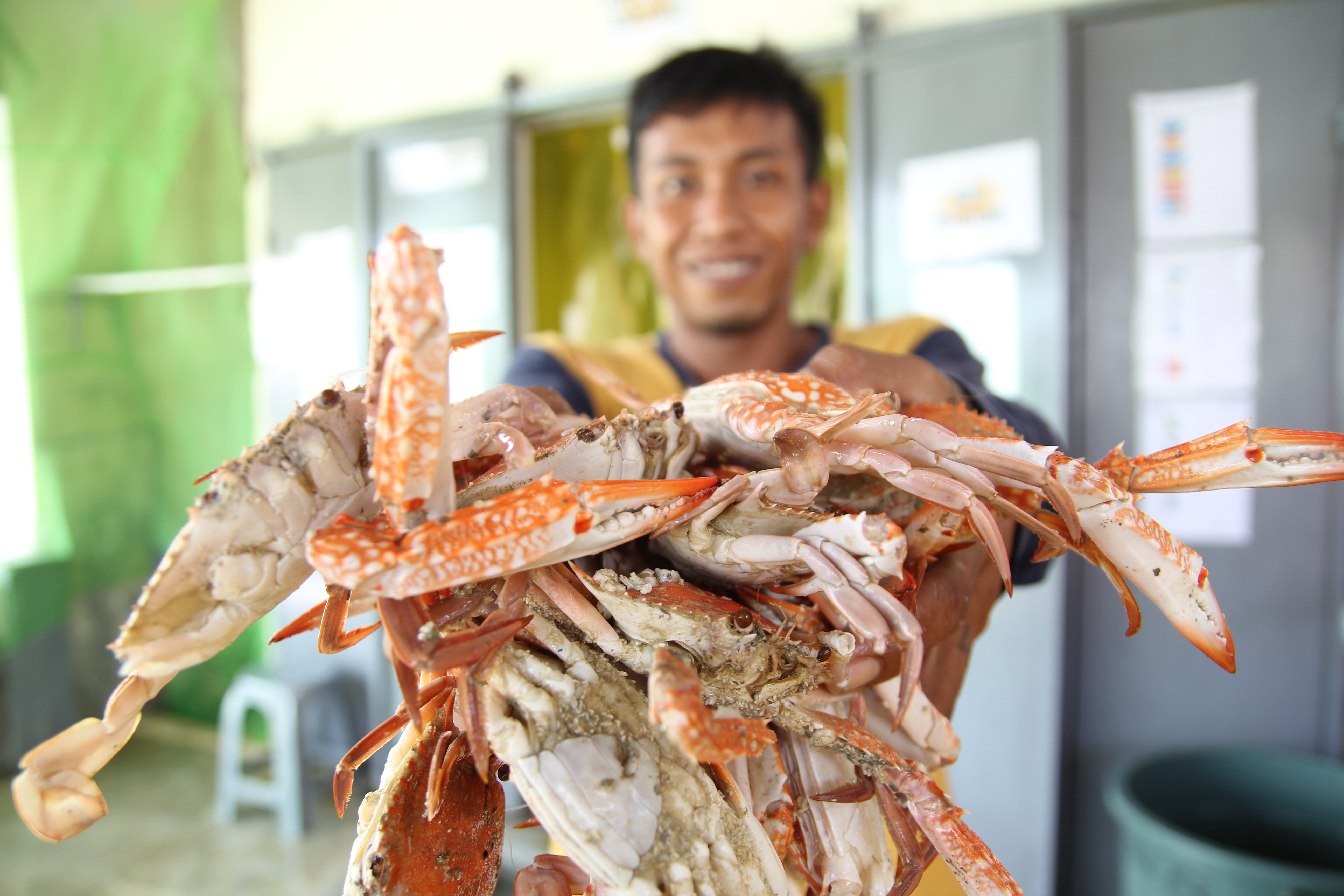
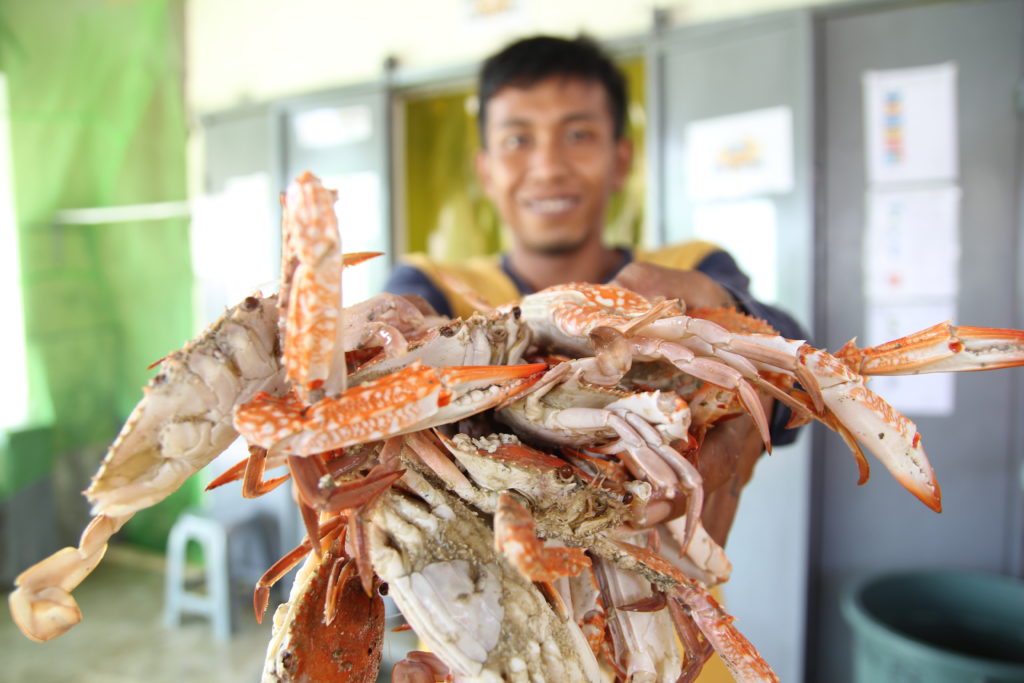
    Sumatran Fisherman with Blue Swimming Crabs

    Initial learning points

    • Data collection required additional training of procurement and quality control teams. This in turn required an additional budget to be implemented effectively.
    • The pilot only covered a small portion of overall U.S. imports from Indonesia (less than 1%) – the current opacity of the supply chain means we did not know how much each mini-plant contributes to the supply chain before the pilot
    • The system efficiency is high enough that recording all landings at a mini-plant or at a landing site is possible, though unless a quality control individual is onsite continually, it cannot guarantee there will be no side selling unless all buyers agree to use the system.
    • The data feedback loop to management has been significantly shortened and is possible in nearly real-time allowing:
      • Faster identification of low productivity landing sites
      • Faster identification of high productivity landing sites
      • Faster identification of undersized and/or berried crab seasons and locations
    • Data integrity and accuracy continues to be an issue and needs to be worked on – Due to their small size, most vessels are unregistered so vessel identification is challenging. Usual data integrity and accuracy issues for data collection operations exist, such as ensuring consistent data entry, checking entries for errors, etc.

    Initial Data Findings

    • Initial indications, based on sampling approximately 10% of the harvest per vessel, are that up to 25% of landings can likely be classified as IUU (berried females & sub 10cm).
    • Boats with lowest supply chain loyalty appear to have higher levels of IUU (an assumption to be tested in additional sites)
    • It is now possible to identify the specific boats that are causing the high levels of infractions, and to address with through the supply chain in a focused manner.
    • Less than 20% of the surveyed vessels were responsible for 80% of the IUU landings

    Fishery Management Implications

    The ability to specifically identify vessels not complying with agreed harvest controls will permit a more targeted, focused and cost-effective approach to monitoring and enforcement of infractions. With less than 20% of the vessels are causing 80% of the issues with regards to IUU landings, efforts can be made to reduce IUU in a focused manner.

    The data provides:

    • Ability to provide shore-based landing information
    • Ability to identify both geographic and seasonal potential closure options based on real data
    • Ability to target enforcement based on recorded infractions
    lead firm crab
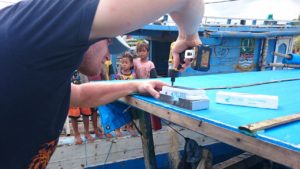
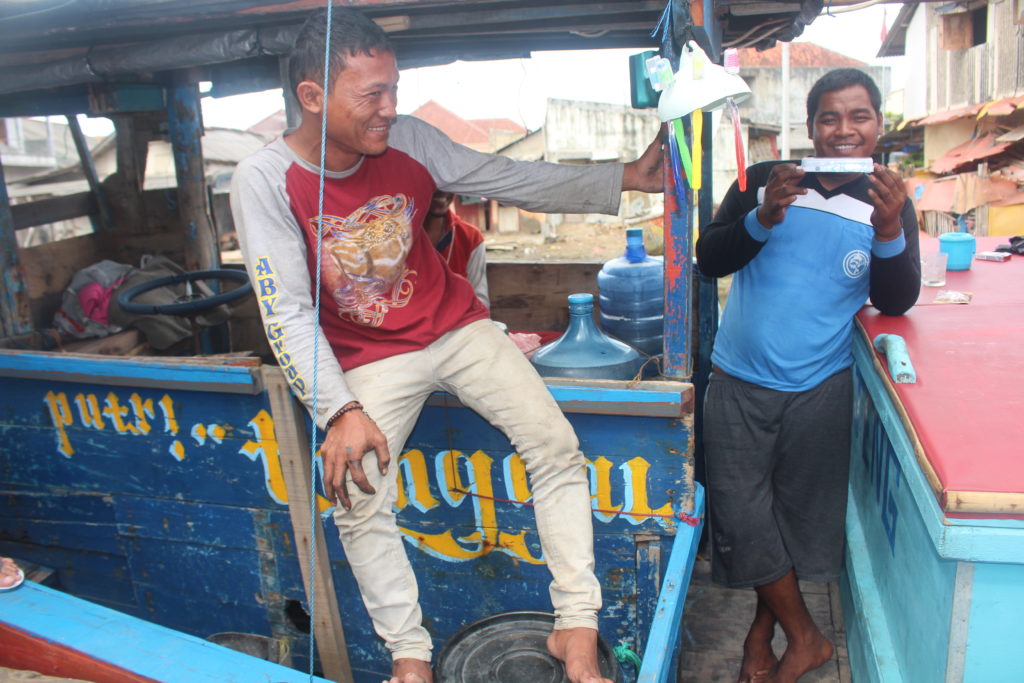
    BSC fisherman with new vessel tracking device

    Links to SDGs

    In addition to the business and fishery management implications, the findings are directly linked to at least three SDGs:

    SDG 8 Decent Work and Economic Growth

    Promote sustained, inclusive and sustainable economic growth, full and productive employment and decent work for all

    Biological data indicates a quick (less than 1 year) stock recovery when undersized crabs are left in the water, thereby increasing the economic value of the fishery and decoupling growth from environmental degradation (Target 8.4)

    SDG 9 Industry, Innovation and Infrastructure

    Build resilient infrastructure, promote inclusive and sustainable industrialization and foster innovation

    Increasing the transparency of the supply chain means that small-scale enterprises, like the mini-plants, can have better access to financial services (Target 9.3).

    SDG 14 Life Below Water

    Conserve and sustainably use the oceans, seas and marine resources for sustainable development

    Using the data generated by the app, progress can be made towards sustainably managing fish stocks, combatting IUU, and providing meaningful market access for small-scale artisanal fishers (Targets 14.4, 14.6 and 14.B).

    Recommendations and Next Steps

    A key recommendation of the initial pilot is the need to establish unique vessel IDs with the support of local government authorities, which will allow more meaningful monitoring and enforcement of landings.

    In addition, the need to engage with, and involve, other firms purchasing from the fishery was identified in order to reduce the opportunities for side selling.

    A second phase is being planned to address the constraints of the first. The goal of the second phase is to:

    • Capture a minimum of 25% of the Blue Star Foods Indonesia sourcing;
    • Integrate improved vessel activity geographic data
    • Expand geographically
    • Include more processors, mini-plants and fishers in Indonesia, particularly in co-packer conditions
    • Replicate into the Blue Star Foods Philippine supply chain

    Conclusion

    The drivers of market access compliance requirements, improved social and financial impact in in artisinal fisheries and greater supply chain integration are powerful drivers for change in any industry. The relatively low cost now associated with data capture tools mean lead firms can utilize almost ubiquitous cell phone availability to cost effectively assess the degree and extent of IUU in their supply chain, while strengthening their impact objectives and improving market recognition.

    This approach provides resource managers and NGOs as well as development agencies with a relevant, cost effective tool to engage private sector supply chains in achieving SDGs in a measurable, informed and data driven manner.


    [1] “U.S. Seafood Import Monitoring Program”. Retrieved on 7 March 2018 from: https://www.iuufishing.noaa.gov/RecommendationsandActions/RECOMMENDATION1415/FinalRuleTraceability.aspx

    [2] “Sustainable Development Goals”. Retrieved on 19 March 2018 from https://sustainabledevelopment.un.org/?menu=1300

    [3] “Capture Fisheries Standard (CFS)”. Retrieved on 8 March 2018 from: https://www.fairtradecertified.org/business/producer-certification

    [4] “Rescate de Valor”. (English: Value Rescue) Retrieved on 8 March 2018 from: http://rescatedevalor.org/
  • Value Rescue in Fisheries

    Do you know of fisheries that have considered or implemented Value Rescue?


    Your knowledge can help others scale fisheries’ enterprises with positive social, economic and environmental impacts.

    We are researching fishing groups, including businesses, associations, co-operatives and similar entities that have tried improving the value of their catch or production while also improving their social and/or environmental performance.

    We are conducting case studies to characterize these interventions and then develop best practice manuals and other materials that can be shared to create a community of practice and scale implementation of the value rescue methodology around the world.

    You can play a role by submitting basic information (location, contact information, intervention, etc.) that we can follow-up for additional research. Click here to begin the 15-minute survey.

    What is Value Rescue in Seafood:

    a process to improve the social and environmental performance of sustainable fisheries through improved financial incentives, product differentiation and market segmentation

    Key components:

    • Enhancing social cohesiveness and decision making around resource management
    • Community based management of sustainable fisheries
    • Culturally appropriate business decision making
    • Product differentiation to secure market access and pricing advantages tied to mission


    We’ll be closing the survey on July 31. Contact Jada at jada (at) wildernessmarkets.com if you encounter any problems submitting your reply or have questions.


  • Investing in sustainability – the role of intangibles

    “Early in the twenty-first century, a quiet revolution occurred. For the first time, the major developed economies began to invest more in intangible assets, like design, branding, R&D, and software, than in tangible assets, like machinery, buildings, and computers. For all sorts of businesses, from tech firms and pharma companies to coffee shops and gyms, the ability to deploy assets that one can neither see nor touch is increasingly the main source of long-term success[1]”.

    Rated as one of the Financial Times Best Books of 2017, Capitalism without Capital is a useful and timely read as we consider sustainability based investment broadly, and sustainable wild capture fisheries specifically. It goes a long way to explaining and addressing one of the many challenges the sustainability community faces when evaluating and considering how to transition “projects” to enterprises.

    Wilderness Markets and others have made considerable progress in identifying, developing and deploying appropriate due diligence questions to address investment risk as well as developing appropriate business plans and models, most recently in wild capture fisheries (with the World Bank). However, these criteria either ignore or assume the presence of effective intangible development capacity which is seldom the case with most natural resource “projects” nurtured by NGO’s and many communities. These “projects” often lack both the human and intellectual capital to effectively develop and grow businesses, leading to an over emphasis on tangible assets.

    Yet, as is clearly defined in this book, this is where significant value is to be gained. In the abscense of effective design, branding, R&D and software, the likelihood of enterprise success is marginal, seldom providing the risk adjusted returns investors would like to see.

    The social implication of this trend are also discussed in the book. It provides good perspective on how inequality is both a result and a cause of this investment trend, resulting in a negative vicious cycle. Applying equally to groups and individuals, in both developed and developing markets, participants are unable to upgrade skills due to economic challenges (or an overreliance on tangibles), thus depriving them of the resources needed to upgrade their skills. We have seen this in fisheries in the United States, Mexico and Asia.

    Intangibles also have significant implications regarding the appropriate types of capital to be deployed. Given the nature of intangibles – identified as the 4 S’s (scaleability; sunkenness; spillovers and synergies), these types of investment are more appropriate to equity than to debt, which has implications on the recently launched debt funds in sustainable fisheries and oceans.

    As we and others continue to evaluate and explore how best to attract private capital to a range of sustainability markets, this book provides good perspective on an important topic.

    [1] Jonathan Haskel & Stian Westlake, Capitalism without Capital; The Rise of the Intangible Economy, Princeton University Press 2017

  • West Coast Pilot – Culinary Workshop

    West Coast Pilot – Culinary Workshop

    A previous post outlined our pilot project in California with Changing Tastes; this post provides a peek into a culinary workshop that is part of the planning phase.

    Purpose

    As part of our work to reintroduce local fish back into local markets in California, our foremost consideration is how to reintroduce them to our plates and palates. Without delicious dishes and high quality products, winning back a space on the plate will be impossible.

    To discover how local fish can create a winning combination of flavor, presentation, and affordability for chefs in corporate dining, our partner Changing Tastes arranged a culinary workshop in California. More than a dozen chefs and several sustainability managers from the same or similar groups joined us in mid-November at a test kitchen in the Bay Area to develop the recipes and messaging needed to successfully bring back Californian West Coast Groundfish.

    Palate and Pocket

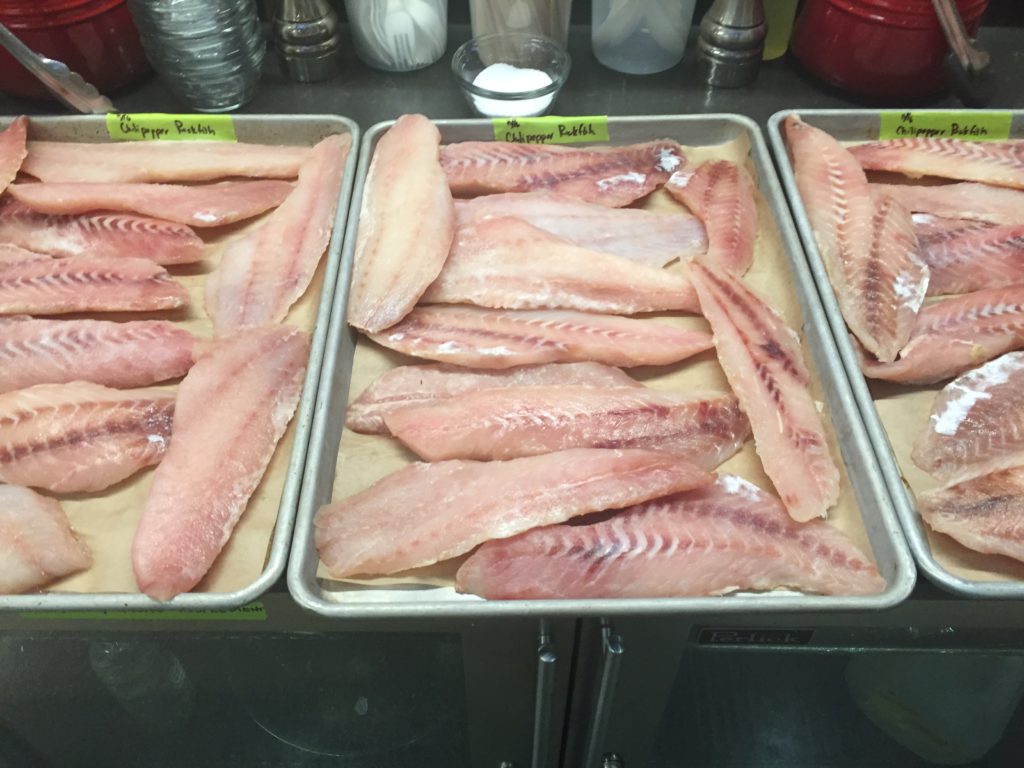
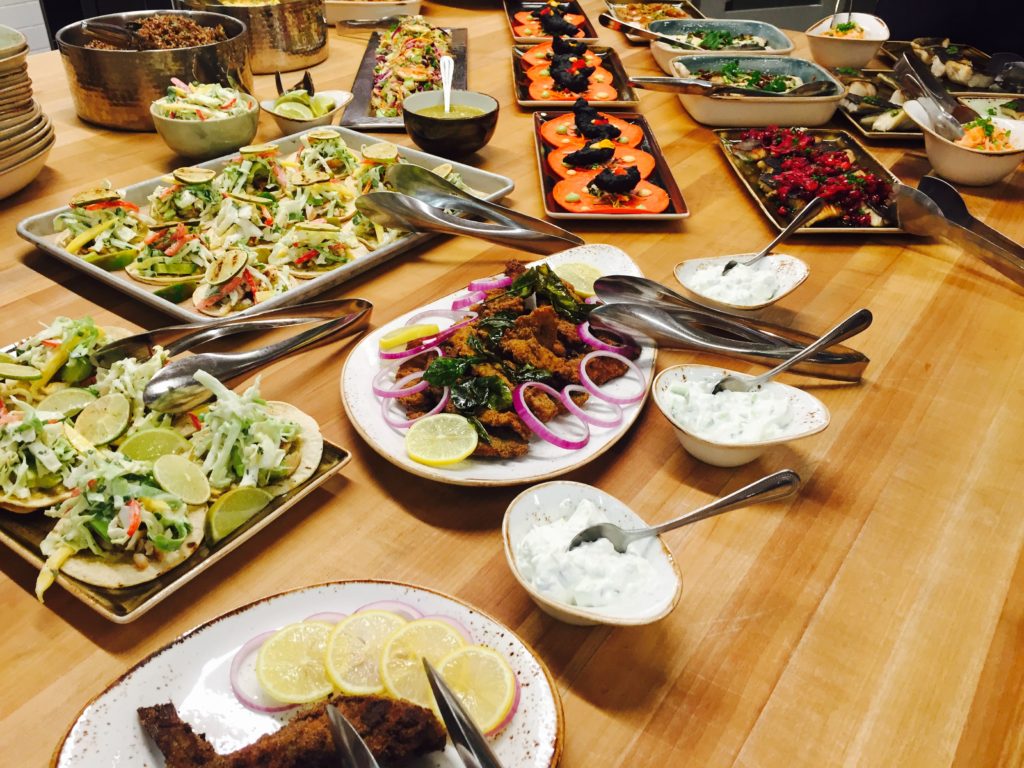
    To explore which fish could please both palates and pocketbooks, the chefs spent the morning preparing a sampling of locally-caught fish, including Dover and petrale sole, boccaccio, chilipepper and black gill rockfish, and sablefish (AKA black cod) provided by Real Good Fish. These fish represent the spectrum of species that are part of the West Coast Groundfish program, one of the most sustainably managed fisheries in the world, and one that has the fish to prove the stocks are  healthy. These are fairly common landings that span from very inexpensive Dover to higher-end sablefish. The variety of textures, thicknesses and tastes were highlighted in Latin and Asian-inspired themes, such as black gill fish tacos with mango slaw (Chef Ochoa), petrale-coconut ceviche (Chef Fogata), black and white coconut crusted black cod (Chef Thomas), and steamed Szechuan boccaccio (Chef Hernaez).

    Heart and Mind

    Equally important to taste and cost is persuading diners to try these new dishes. In a nearby space, restaurant industry marketing and communications executives as well as sustainability managers and representatives of groups that support sustainable seafood brainstormed marketing ideas for the dining spaces where the fish will be offered to diners next spring.

    Common themes included emphasizing that the fish is locally-caught in California. They noted that “local” often implies fresh to diners. Including a map of the different ports where the fish originates from for the pilot, and identifying fishermen and women from each was another popular theme.

    Marketing experts, chefs, sustainability managers and others agree on not using the word “groundfish” in marketing materials. This group and others realize that this collective term for these species isn’t one that necessarily appeals to diners, nor does it help them understand the diversity of species and flavors within the broad category.

    Pilot Evaluation

    Among potential evaluation methods and data points, our participants identified these as the most likely:

    • On-site, established food focus groups
    • Measurement of orders by volume
    • Gauging the relationship between price of dishes and purchases
    • Comparison to sales of other seafood dishes
    • Comment cards
    • Online commenting system
    • Surveys, potentially with incentives, and/or provided in a quick format via touchpad at the point of purchase
    • Querying the culinary team during and after the pilot


    Post-workshop steps

    Our next tasks are confirming which specific dining halls and cafes will participate from each of the corporate dining partners and confirming likely order volume by species or species group, e.g., petrale sole is a species and rockfish is a species group. Almost simultaneously, we will work with the corporate dining partner and their existing distributors to determine the likely sources, feasible start dates, and volumes. We look forward to sharing updates as this work progresses in 2018.


  • Identifying Blue Economy Opportunities & Threats

    At the core of our work, we believe taking a value chain approach to investing in development is the most responsible and most sustainable. Interlaying this approach with the development of the blue economy will ensure proper assessment of opportunities and threats.

    Blue Economy

    No single definition of “Blue Economy” exists; like the word “sustainability”, answers are scattered and subjective. To economic theorists, it refers to a type of circular economy where nothing is wasted, but to those involved with oceans or fisheries work, it refers to development and use of marine resources, although even this definition is subjective.

    The marine-focused usage of blue economy has numerous definitions and is interchanged with “blue growth”. Many, like WWF, the Economist Intelligence Unit and the World Bank Group include sustainable economic, environmental, and social outcomes, i.e., triple-bottom line outcomes, while others refer to all economic activity generated by maritime industries.

    In March of 2015, John Tobin, Global Head of Sustainability at Credit Suisse said,

    “The “blue economy” is about conducting economic activity in a way that is consistent with the long-term capacity of marine ecosystems to sustain themselves.”

    Figure 1 Fishing vessels, California, USA

    Credit: By specchio.nero (San Diego harbor) [CC BY-SA 2.0 (https://creativecommons.org/licenses/by-sa/2.0)], via Wikimedia Commons

    Value Chain Approach

    While Wilderness Markets’ employs the USAID Value Chain Approach, a value chain approach is, at its core, market systems approach to development. These approaches acknowledge that industries do not operate in a vacuum – outside forces, like governments, resource and labor availability, and similar industries – create a dynamic system in which value chains exist. The value chain approach seeks to understand these so that the principal constraints to competitiveness, which can lie within the system or the environment, can be understood and mitigated. Failure to do so can result in unsustainable growth or detrimental impacts.

    Figure 2 Women harvesting seaweed, Zanzibar, Tanzania
    Credit: Jada Tullos Anderson

    Synergy of the Blue Economy and Value Chain Approach

    One of the striking aspects of the multiple definitions of the blue economy is that the definitions imply a comprehensive approach to developing and using marine resources, aligning well with the value chain approach to development. Indeed, considering the main purpose of the value chain approach is to account for the dynamism of an industry or supply chain, then there can be no more perfect example of a dynamic business environment. The natural coastal and marine environment is always in flux and resource availability must be accounted for when considering the threats to a value chain. Similarly, global markets affect most marine-related activities and must similarly be considered when determining blue economy development pathways.

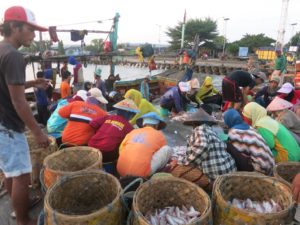
    Figure 3 Women sorting catch, East Java, Indonesia

    Credit: Jada Tullos Anderson

    Applications

    Integration of the blue economy and the value chain approach is well-suited to fisheries, aquaculture, maritime services, tourism, and, particularly, to locational development that integrates multiple sectors, such as fisheries, tourism and port development as the unique and common needs of each can be considered as part of a whole solution. This can be useful for government authorities as they seek to cost-effectively develop and regulate coastal areas. Funders and financiers may also be receptive to this approach as it allows simultaneous de-risking through diversity and bundling of financing to decrease transaction costs.

    Figure 4 Honolulu and Waikiki Beach economy includes tourism, fishing and shipping, Hawaii, USA
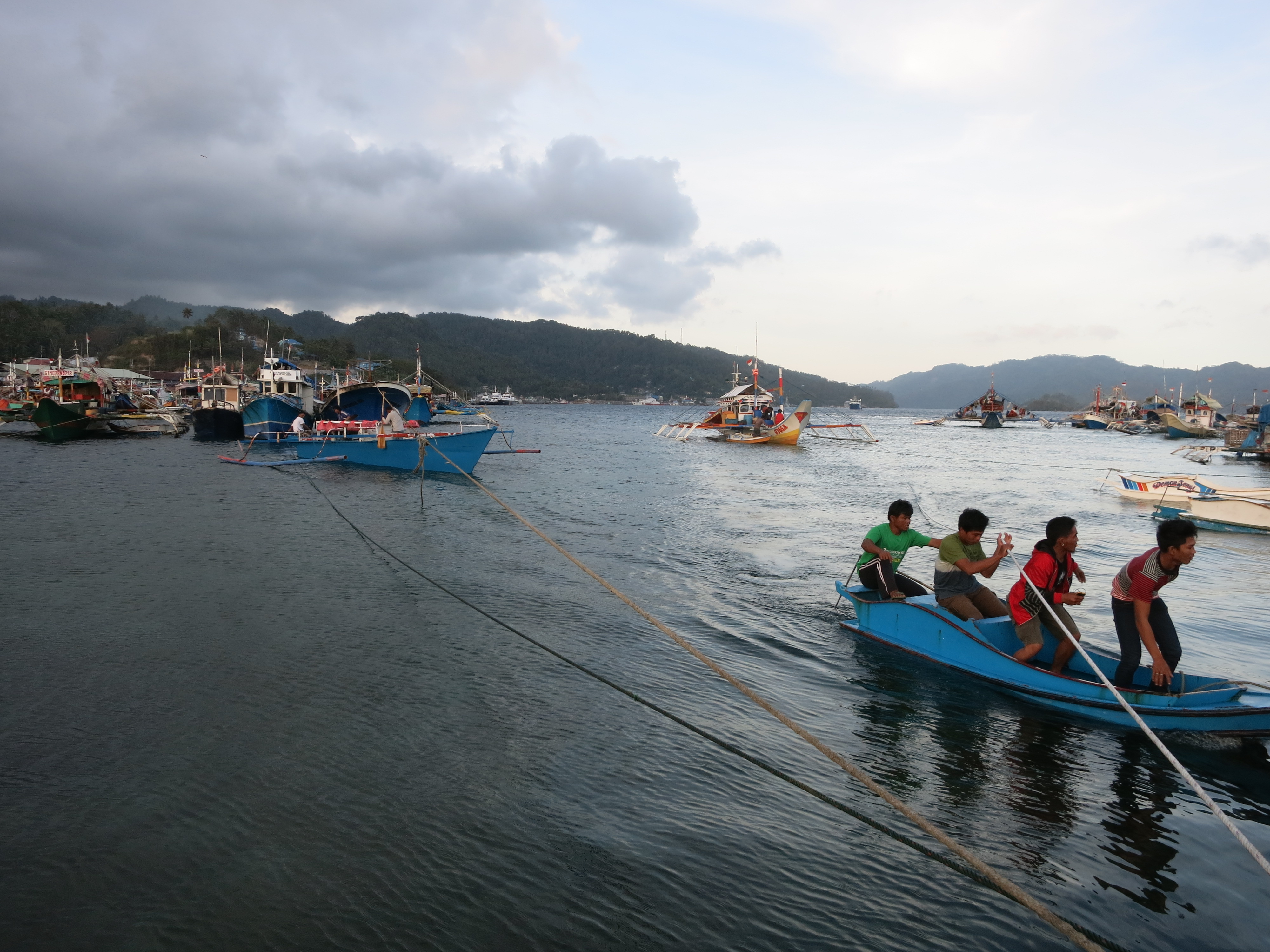
    Credit: Jada Tullos Anderson

    Final Thoughts

    The value chain approach naturally fits blue economy development, offering improved value to developers and funders, while adding to the sustainability of the marine environment for people, business, and nature.

  • The Finance Gap in Sustainable Wild Capture Fisheries

    Over the past few years, three broad strategies have evolved to address the challenge of achieving sustainable wild capture fisheries. These consist of:

    • Addressing governance, regulation and policy
    • Providing preferential access to markets via certification mechanisms and Fishery Improvement Plans
    • Aggregating mission aligned capital

    While each of these strategies have merits in and of themselves, they function best if their implementation is aligned, particularly in emerging markets where parallel or consolidated approaches are more likely to succeed than a serial approach. The implementation of these three strategies independently of each other often result in distortions that misalign incentives. As a consequence, this lack of alignment has resulted in few real world business examples or models that can effectively scale across fisheries, geographies and communities. Despite the attractiveness of economics of fisheries reform in at a macro level, the financial implications for practitioners in the real world have been challenging.

    We especially note the development of mission aligned capital for sustainable fisheries in the past year. The Althelia Sustainable Oceans Fund and the Rare Meloy Fund are now either operational, or close to being operational. These new facilities represent important progress in this space.

    While these represent important steps forward, they do not, as of yet, address the demands of current market conditions, particularly in emerging markets. Based on our field assessments in Asia, Latin America, parts of Africa and the United States, the reality is that the majority of the demand lies in defining, developing and testing sustainable fisheries instruments and models that may, one day, be eligible for the Meloy Fund or the Oceans Fund.

    One sequence of fund development is to a) prove a concept, b) grow and refine and c) to deploy large scale capital (courtesy of Dalberg Global Advisors).

    1. Prove the concept – at this stage, practioners are testing financial instruments and models in a variety of settings with a wide variance of risk – returns and a great deal of tail risk. Transactions are often small, with high transaction costs, and with limited to no track record. While the Meloy Fund may most closely approximate these characteristics, the Funds requirements and relatively high return requirements and minimum transaction sizes remain a mismatch for the sector.
    2. Grow and Refine – at this stage, practioners are aggregating small scale proven models into larger vehicles; allocating and pricing risk appropriately; have a track record to demonstrate risk returns and an experienced team.
    3. Deploy Large Scale Capital – at this stage, practitioners are able to deploy large pools of institutional capital towards proven concepts; have more stable returns with lower tail risks and lower transaction costs as well as strong comparable track records for the sector and fund managers.

    Based on our reviews, in the absence of financial instruments and model with documented and understandable risk, the sustainable wild capture fisheries sector appears to have a significant funding gap at the “Prove the Concept” stage. Resources are required to define these instruments and models, ideally with existing sector participants, many of whom are searching for approaches to transition NGO driven projects to investable entities with very limited success to date.

    In reality, there is a significant pool of potential projects in the form of Fishery Improvement Plans, fishery projects, blue economy projects and alternative livelihood projects in many geographies. While Wilderness Markets has developed a systematic analysis of the potential investment opportunities in a number of fisheries, we have been struck by the rather random approach to this challenges and the lack of resources to systematically support the transition to investable entities that may, one day, be eligible for investment from the Meloy Fund or the Oceans Fund.

  • A “Second Notice” to Humanity

    Over 15,000 scientists from around the world have issued a somber notice to humanity. As they state:

    “Humanity has failed to make sufficient progress in generally solving these foreseen environmental challenges, and alarmingly, most of them are getting far worse,” they write. (Our emphasis added).

    We encourage a close reading of the paper, if only for the graphs.  The 25 year graphs provide important context.

    If many companies saw these trend lines for their expenses or risk factors, we assume they might react. But  society as a whole (and the current US administration) has so far generally ignored the implications of these trends.


  • How to Develop Impact Investment Opportunities in Sustainable Fisheries

    The Need for Sustainable Fisheries Finance

    We know all the problems associated with overfishing and we know that research shows:
    1) that switching to more sustainable management will lead to increased revenues and food security; and
    2) the cost for doing so exceeds what can be provided through traditional development and philanthropic organization.

    How do we get past the second to make the first possible? Supported by the World Bank, and with input from dozens of impact investors and fishery experts, we detail the main barriers and potential approaches to overcome them in our latest paper: Developing Impact Investment Opportunities for Return-Seeking Capital in Sustainable Marine Capture Fisheries.

    Who Should Read This Paper

    This paper provides an overview for international development organizations, development finance institutions, NGOs, and the governments they work with of (i) the key concerns that impact investors may have when considering the financing of sustainable fisheries, and (ii) potential approaches for public-private partnerships to overcome these obstacles. It is intended as a primer for these actors, to understand the perspective of the commercial impact investor.

    Overview

    This paper explains the central challenges that keep impact investors from participating in sustainable fisheries, and is structured along four main barriers:

    1. A lack of reliable fishery data
    2. Ineffective fisheries management
    3. Unreliable infrastructure systems
    4. A paucity of investment-ready enterprises

    It then proposes three models for sequencing and combining different sources of capital to overcome these obstacles:

    • Serial approach: Public and philanthropic funders first support the establishment of strong governance arrangements, improved data collection, and fishery management. Once these initiatives mitigate some of the risk associated with a fishery investment, then return-seeking investors are incentivized to finance sustainable infrastructure projects (often through public-private partnerships) and/or enterprises along the value chain, focused on outcomes that achieve a triple bottom line: social responsibility, economic value, and environmental impact.
    • Consolidated approach: Governments negotiate agreements with a single private sector entity or cooperative to delegate fishery management responsibilities. The private firm or cooperative then simultaneously invests in fishery data, management, infrastructure, and triple bottom line enterprises.
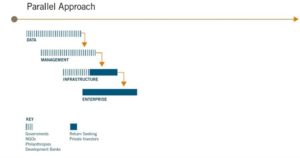
    • Parallel approach: A range of investors and other stakeholders (for example, governments, nonprofit organizations, fishing collectives) develop coordinated investments to improve fisheries data, management, infrastructure, and triple bottom line enterprises. Efforts can be separately funded, but they work in tandem and share the ultimate goal of achieving sustainable catch with an appropriately capitalized and profitable fishing sector.

    Each of these sequencing models presents particular challenges and opportunities. Structuring investments to achieve triple bottom line outcomes is still a new idea within the fisheries sector. There is growing evidence from other sectors, however, including agriculture and forestry, that these types of investments are achievable. Examples include the Moringa Fund[1] and Livelihood Funds,[2] which bring together public institutions, private investors, and NGOs, using innovative investment models to simultaneously address environmental degradation, climate change, and rural poverty while helping businesses become more sustainable.

    The Impetus

    Attracting impact investments is critical for the future of fishery recovery and expansion—these projects cannot rely on short-term loans and grants; they need longer-term finance that is committed to sustainability and responsibility. Development organizations, NGOs, and other noncommercial actors have a critical and catalytic role to play in crowding-in impact investment for sustainable fisheries by sharing risk with the private sector, promoting policy reforms, and funding interventions (through either concessional lending, grants, and/or technical assistance) with the intention of removing the barriers to impact investment.

    Read the paper: Developing Impact Investment Opportunities for Return-Seeking Capital in Sustainable Marine Capture Fisheries


    [1] The Moringa Fund is a EUR 84 million investment fund that targets profitable large-scale agroforestry projects with high environmental and social impact in Latin America and Sub-Saharan Africa. The fund makes equity investments of EUR 4–10 million per project and adds value through its technical skills, environmental and social expertise, and global network.

    [2] The Livelihood Funds are a series of investment funds created by Danone, which brings together investors—including Schneider Electric, Crédit Agricole S. A., Michelin, Hermès, SAP, CDC Climat, La Poste, Firmenich, and Voyageurs du Monde—to invest over EUR 40 million to finance nine on-the-ground programs for mangrove restoration, agroforestry, and rural energy.


  • Leverage the Middle for Improved Fishery Management and Revenue

    Leverage the Middle for Improved Fishery Management and Revenue

    The New Middleman: Service Provider and Quality Assure

    “Middle man — the very term itself is associated with extra hoops to jump through, farmers being cheated, and limited value being offered to farmers and value chains generally. The idea of cutting out the middle man is frequently thought of as a selling point, casting these intermediaries as the “bad guys” of the value chain, worth avoiding whenever possible.” -Robert Anyang, Chemonics

    Reading this recently on the Agrilinks blog, I subconsciously substituted “fisher” for “farmer” because the same is true for our marine resources. Our friends at Smartfish, in Mexico, led us to imagine how a “good middleman” could lead to a more equitable distribution of money along the value chain, i.e., greater social impact, while also promoting fishery health, i.e., environmental impact.

    Leveraging the Middle
    Parallel Approach to Fisheries Development

    At Wilderness Markets, we believe that middlemen, whether they are called intermediaries, buyers, or agents, can provide a vital link in low governance fisheries. (We consider simultaneous governance and value chain development in emerging markets as a “parallel approach” to fisheries. You can read more about this here and here.) Processors and distributors committed to promoting responsible fishing can employ “good middlemen”. These can provide services and also act as service providers and informal fishing rules enforcers  in geographies where official government management is lacking.

    The Current Role of Middlemen (and Women)

    Often viewed as part of the problem, in many instances independent middle buyers often take on a great amount of risk in the value chain. By paying cash for goods, they then take responsibility for ensuring they’re able to make a profit. This may require days of transport, during which any delays or excess heat cause spoilage and loss of value. They also take on the burden of finding the best paying buyer. In Indonesian tuna, snapper and swimming crab value chains, middle buyers also forward cash and supplies to the fishermen they purchase from.

    Yes, some middle buyers take advantage of the harvesters they buy from – charging exorbitant interest, or not paying a fair amount for the product. This is an opportunity for competitors.

    Better Use of Resources: The Role of Intermediaries in Parallel Development

    Smart end buyers have started taking advantage of these vacuums as opportunities to assure quality, but this could be leveraged even more. So far we’ve seen a processor in Indonesia who keeps local middle buyer on their payroll; the community knows and trusts her, and she targets the best quality tunas. She pays well and in-cash; however, she does not let the community know she’s actually working on behalf of the processor because they fear the community may either not want to sell to her or may expect higher prices.

    In Indonesia, fisheries are generally data poor and enforcement of regulations, if they exist, is lax in most fisheries. As is common, the fishing industry is as or more developed than fishery management. This situation is prime for parallel development, whereby industry, government, NGOs, and philanthropy work together to promote sustainable development of the fishery so that fishers can continue to harvest but not to the detriment of successive generations.

    Localized data collection and management are increasingly popular ideas and are of great interest in the blue swimming crab (BSC) fisheries where exporters are trying to avoid overfishing due to its high costs, like smaller and fewer crabs, that may force companies to eventually relocate their operations. Efforts like this is one of the ways to increase enforcement in locations where the government has difficulty doing so. Middle buyers working on behalf of companies affiliated with exporters can promote responsible fishing is by not buying undersize or actively reproducing females.

    Leveraging the Middle
    Sumatran Fisherman with Blue Swimming Crabs

    Using the Middle for Management

    We recently worked with one US importer of Indonesian BSC (about 80% of Indonesian BSC is exported to the US) to create a mobile app that allows the picking plants, who are a first or second level “middleman”, to keep track of landings data, including size, fishing grounds, and weight. Among the benefits are the ability to avoid areas with undersize crabs and egg-bearing females. As both have lower quality meat, it means that not only are the plants more able to avoid this lower quality crab, but also that the crab population has more of an opportunity to regenerate. A win for the plants, the fishers (who can make more money) and the environment.

    Working together to promote smarter management produces benefits for fishers and the environment which improves stability of the resource for the importers. Companies can gain more agency over the product quality as well as improve fishery management by employing middlemen as agents and intermediaries.


    Subscribe or send us an email to stay updated on our work—both options are below.

  • The Wild Blue Crab Investment Model – a case study

    Industry stakeholders understand that overfishing undercuts long-term value and prevents realization of full economic potential in local communities. The question is, what to do about it? Wilderness Markets and Blue Star Foods collaborated on a pilot program to develop one potential solution.

    Problem

    Rising demand for seafood combined with limited public spending on fishery management systems has led to overfishing worldwide. As of 2013, almost a third (31.4 percent) of fish stocks were fished at biologically unsustainable levels, a 10 percent increase since 1974 (FAO 2016). In 2016, just over 58 percent of fisheries were considered fully exploited, with no expected room for further expansion (FAO 2016). Recent research indicates that these numbers are actually underestimated: FAO statistics do not include thousands of small-scale fisheries, recreational fishing, accidental catch of non-target species, and illegal fishing because they aren’t measured (Costello et al. 2012; Pauly and Zeller 2016). In addition, global trends mask the fact that many individual fisheries have collapsed and fishing boats have moved on to exploit new species (CEA 2012). This undercuts fisheries’ ability to provide long-term social and economic benefits to the local communities.

    Wilderness Markets and others in numerous fisheries have conducted extensive value chain research. This research indicates that while the harvesters tend to bear the costs of fisheries management improvements, the economic benefit tends to be captured by participants further up the value chain – aggregators, processors and exporters. This is particularly the case in emerging market fisheries, where several factors collide:

    • The inability to evaluate stock status and fishery conditions, due to the lack of reliable fishery data and track records, make it difficult to assess investment risk and rewards.
    • The current open access nature of fishery and the absence of tenure rights and enforcement mechanisms do not allow the benefits of fishing improvements to accrue to specific fishermen.
    • The large, numbers of individual, unregulated fishermen, who tend to operate opportunistically, making it costly to negotiate and monitor fishery improvement agreements.
    • The lack of successfully tested models for implementing traceability measures means that there are few investment opportunities and few models to emulate.

    Using Blue Swimming Crab in Indonesia as an example, research shows that while processors in the value chain stand to benefit from improved BSC management, these companies do not typically invest directly in helping fishermen transition to sustainable practices due to the above factors. While many processors are interested in supporting sustainability, it is difficult for them to demonstrate reliable return on investment (ROI) to their investors to justify financing these efforts.

    Because of these hurdles, fishery improvement efforts end up relying on ongoing philanthropic support or government subsidies, without reliable economic incentives for change built into existing business models.

    Parallel Approach
    Sumatran Fisherman with Blue Swimming Crabs

    Wilderness Markets teamed with Blue Star Foods, a Miami, Fla.-based distributor of quality crabmeat, to explore creating an industry-led sustainability initiative within the BSC fishery in Indonesia, Indonesia with the hope it would provide a blueprint for other fisheries.

    Approach

    The first step in our approach was to gain a clear understanding of the concerns and needs of impact investors, believing this understanding will allow development organizations, NGOs, and others, to better sequence their interventions (that is, through their risk instruments, matching capital, public and concessional financing, technical assistance, and macro-level reforms, and policy initiatives) to encourage private sector participation while leveraging and preserving scarce public dollars for critical public investments.

    We specifically explored the central challenges that keep impact investors from participating in sustainable fisheries:

    1. A lack of reliable fishery data
    2. Ineffective fisheries management
    3. Unreliable infrastructure systems
    4. A paucity of investment-ready enterprises

    The team analyzed the current state of fishery data collection, resource management, infrastructure systems, and enterprise capacity in the fishery. We found that — like many fisheries in emerging markets — the BSC fishery lacked reliable data and, despite new national fishery policies, functioned largely without effective management and enforcement. We also found strong, established commercial and social relationships within the value chain that point to the power and influence of a small group of 16 processors that buy BSC from 400 mini-plants that, in turn, purchase crab from more than 65,000 fishermen.

    Using the data collected, we identified and analyzed three models for sequencing and combining different sources of capital to overcome obstacles:

    1. Serial approach: Public and philanthropic funders first support the establishment of strong governance arrangements, improved data collection, and fishery management. Once these initiatives mitigate some of the risk associated with a fishery investment, then return-seeking investors are incentivized to finance sustainable infrastructure projects (often through public-private partnerships) and/or enterprises along the value chain, focused on outcomes that achieve a triple bottom line: social responsibility, economic value, and environmental impact.
    2. Consolidated approach: Governments negotiate agreements with a single private sector entity or cooperative to delegate fishery management responsibilities. The private firm or cooperative then simultaneously invests in fishery data, management, infrastructure, and triple bottom line enterprises.
    3. Parallel approach: A range of investors and other stakeholders (for example, governments, nonprofit organizations, fishing collectives) develop coordinated investments to improve fisheries data, management, infrastructure, and triple bottom line enterprises. Efforts can be separately funded, but they work in tandem and share the ultimate goal of achieving sustainable catch with an appropriately capitalized and profitable fishing sector.

    Outcome

    Based on our findings, we identified the “parallel approach” as the most appropriate for the BSC fishery in Indonesia. We coupled this with a “lead firm strategy,” in which a “market maker” firm ensures market access and aligns economic incentives for change. This industry-led sustainability initiative draws on the experience Wilderness Market has in a number of other sustainable agricultural markets.

    In this case, the strategy works with a U.S. based lead firm, to create financial and social incentives to

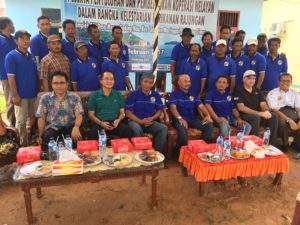
    Lead firm and harvester
    Lead firm and harvester meeting

    enable fishermen to transition faster to sustainable fishing practices and improve management. Through its purchasing power and economic and cultural relationships, the lead firm is in a strong position to influence the practices of a range of processors, who have commercial and cultural relationships with a network of mini-plants, collectors, and fishermen.

    Together with the lead firm and local harvesters, we developed a pilot model based on a partnership between the lead firm and a producer organization or fishing cooperative. The model brings together limited amounts of philanthropic capital and relies primarily on private capital to provides financial, social, and environmental returns. This return-driven model includes:

    • Purchase commitments based on price, quality and standards
    • Investments in fishermen cooperatives to motivate gear improvements and sustainable practices
    • Improved fishery data collection and traceability
    • Support for harvest control compliance

    The pilot project is designed to align and attract private, return-seeking impact investment to the fishery and complement ongoing work by NGOs in the region to improve fishery management. Critically, it is designed to address the lack of loyalty in relationships between local harvesters and the supply chain, thus providing a basis to address the return on investment for improved fishery management.

    Provision of ice is a key concern

    We expect this approach will enable local fishermen to better organize, adopt sustainable practices faster than waiting for the government to create and enforce management changes on its own, and address the economic hardships fishermen face when resolving changes in fishery regulations. It will also help bolster local business and community support and advocacy for more effective fisheries management policies and enforcement through a legal, local cooperative structure.

    The new facility focuses on utilizing good data to address a prioritized sequence of fishery management measures related to size, sex and seasonality in BSC fisheries in Indonesia[1], where illegal and destructive fishing practices are pushing crab populations toward collapse. By strategically investing capital in priority data, fisheries management[2] and harvest related changes, the facility proposes to share the upside of recovery with local harvesters and business through the value chain.

    Vessel tracking unit to improve traceability

    This impact initiative is aligned with local regulations in Indonesia[3] to further assure social, environmental and economic impact.

    As a result of better data collection, alignment of economic incentives and effective supply chain management, the fishery will produce higher yields of BSC. It will also provide a traceable, sustainably harvested product that will have a competitive advantage in key U.S. and E.U. markets where the lead firm and supporting investors will be able to recoup their investments in sustainable practices.

    Ultimately, we hope to help establish a management or governance unit of key stakeholders — including fishers, mini-plant operators, district and provincial heads, processors, scientists and APRI representatives (the association of Indonesian crab processors)  — in order to address factors in the enabling environment, which will strengthen this pilot.

    Why It’s Successful

    We believe this pilot will help overcome a key roadblock in creating sustainable fisheries in emerging markets: it provides a concrete, “proof of concept” that can demonstrate the financial success of sustainability investments and encourage other fishing industries to design similar programs.

    By embedding sustainability requirements within existing value chain relationships and practices, we will:

    • Demonstrate the financial viability of investments in fishery data collection and management, thus attracting additional private sector action and corporate investment in, and support for, these practices.
    • Create new norms in the fishery that are sustained because of their business value rather than relying on ongoing philanthropic support; government subsidies or inefficient enforcement to succeed.
    • Provide clear and reliable financial benefits for small-scale harvesters to make gear changes, follow harvest control measures, and take on other sustainable fishing practices. This alignment of immediate economic well being with sustainability practices will improve compliance and reduce the short-term, negative impacts of fishery restrictions on local economies and communities.
    • Test a new, “parallel” investment model for combining philanthropic, government, and private sector funding to address fishery management issues. If successful, this model can be tailored and applied to other fisheries in emerging markets.

    While we are starting with BSC fisheries Indonesia, the problems these fisheries face are common in a number of emerging market fisheries. We are building a model that can be rapidly modified, applied and scaled in a variety of fisheries around the globe.

    We believe the pilot BSC program will help overcome a key roadblock in creating sustainable fisheries in emerging markets because it provides a concrete “proof of concept.”

    ——

    [1] “Indonesian Blue Swimming Crab Value Chain Summary”. 2015. Wilderness Markets. http://www.wildernessmarkets.com/portfolio/indonesian-blue-swimming-crab-value-chain-summary/

    [2] Jeremy Prince. 2015. Indonesia BSC Spawning Ratios. Unpublished data from personal communication.

    [3] RPP Rajungan, decree number 56/Permen – KP/2016 for BSC Fisheries Management