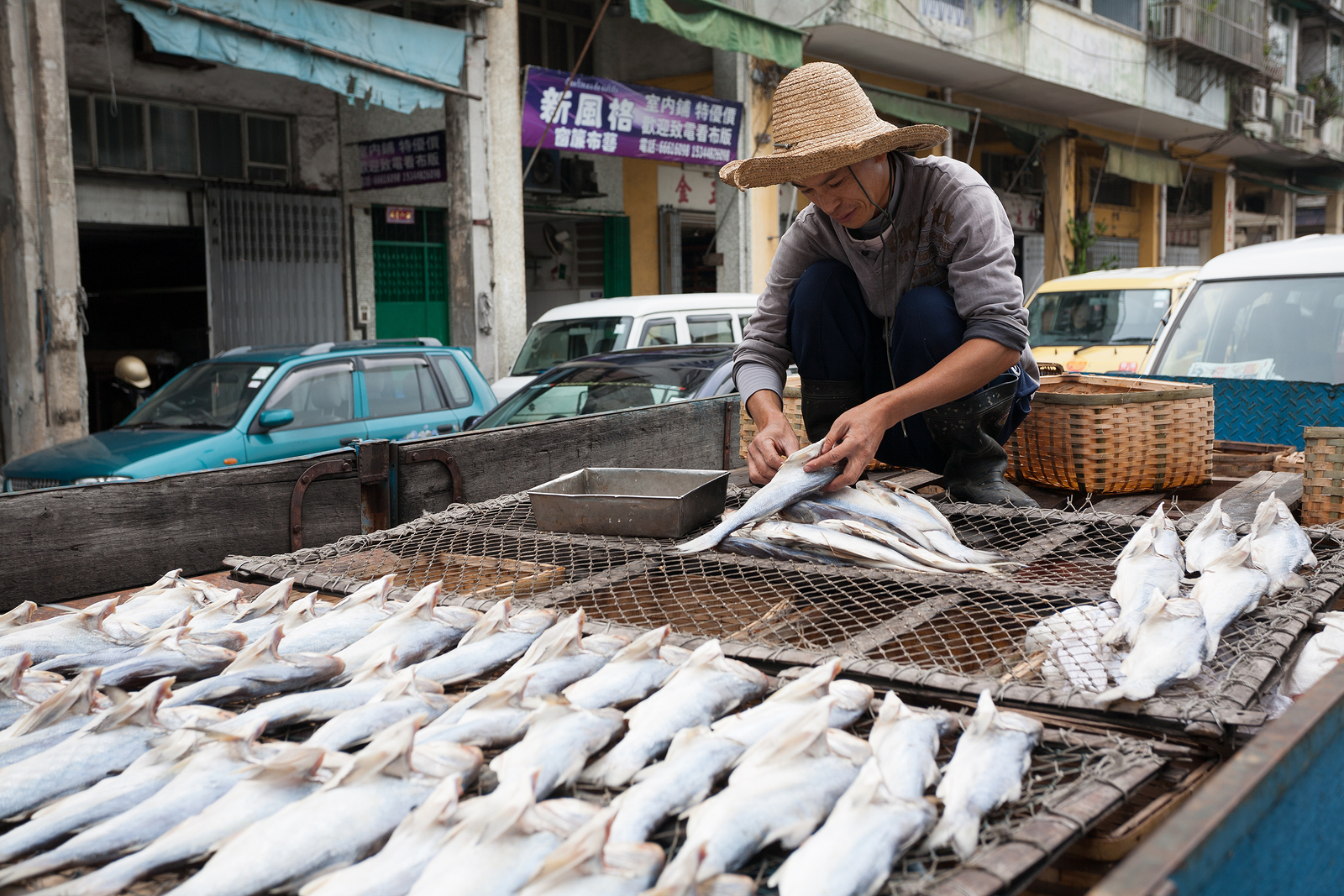
This is part 1 of a 4-part series intended to invite conversations in advance of our planned end market demand analysis for groundfish in California. The larger goal is to provide quantified end market data to inform profitable value chain investments that will positively impact harvesters, local communities and the ocean. (more…)
Blog
-
Does certification lead to better prices for harvesters?
 Impact and philanthropic investors have an interest in participating in sustainable fisheries to enable effective management, to generate market share and price premiums and to ensure that harvesters are rewarded for and incentivised by sustainable practices. What tools do we have to determine when sustainable fisheries products gain market share and trigger changes in seafood pricing? Certain certified and ecolabeled seafood products have price premiums in the market. Can certification serve as a sound metric for good investment decisions in sustainable seafood? Studies thus far have demonstrated varying price premiums in certified products. These include:
- Marine Stewardship Council (MSC)-certified frozen processed Al aska Pollock products in London with a 14.2%. price premium;
- MSC labeled salmon products in Glasgow, UK with price premiums in low-end retail chains but not in high-end chains;
- MSC certified products in Australia generated 30-50% price premiums and;
- MSC certified Haddock has a 10% price premium in Scotland for processors and wholesalers.
MSC products do not always guarantee price premiums nor do they ensure long-term sustainability and economic gains for the harvester. Noted benefits for harvesters include access to new markets and processing opportunities for value added products, but not a trickle back from price premiums. A price premium found on a product in a retail chain or region does not mean the premium is globally ubiquitous. MSC notes that harvesters or chain of custody operators seeking certification do so to achieve sustainability outcomes, to gain clout and to improve negotiating capacity with large institutions. The goal of certification, therefore, is not always to attain price premiums or increased market share.
In addition, MSC does not collect market data prior to certification and thus does not measure changes in price. Over 10% of wild-capture seafood products are certified by the MSC. There are over 15 ecolabels for certified wild-capture or aquaculture seafood products, all of which have different metrics for certification and none of which measure if higher income from increased market share and price premiums reach the harvester. While MSC and other certifications can generate price premiums and seem to open market access, they are not yet a proven smart investments for all sustainable fisheries.
-
The What’s and Why’s of Wilderness Markets
WHAT?
“What do you do?”
The big picture, easily digestible, non-jargon answer: We’re trying to figure out how to make it possible for impact investors to work with fishermen to continue catching fish from our oceans, make money doing so, and still have enough fish for future generations.
The buzzword, jargon answer: We’re using value chain based analysis to determine constraints preventing impact capital from flowing to triple-bottom line SMEs in fisheries.
After that question has been settled with a degree of satisfaction, the natural follow-up question is, “Yes, but WHAT do you do?”
The big picture, simple answer: We use readily available data to give us an idea of how big a fishery is in terms of volume and value and what the important markets are for the fishery. This way we can figure out the most important parts of the fishery and focus our efforts there.
The more in-depth answer: We use readily available data to characterize the value chain flows, and we use interviews, scientific papers, and previously published reports to identify opportunities and constraints within the value chain.
WHY?
Not often asked directly, is the question of “Why?” Why are you doing this? Why is it important?
Millions of people rely on fish as their primary source of protein, and billions more benefit from having fish in their diet. A healthy ocean is a great asset to all of us.
We also think it’s a great challenge. How do you quantify risk for a resource you can’t see and where the capriciousness of weather dictates when you can and can’t fish? The multitude of stakeholders adds another layer of challenge: harvesters, processors, distributors, retailers, restaurants, consumers, multiple levels of government plus the local communities, NGOs, and more. Considering the nature of fisheries and the plethora of stakeholders, it’s no wonder that this sector can be overwhelming for financial institutions to explore.
Finally, and perhaps most importantly, we want to see fisheries investments done well. No one benefits from short-sighted projects that may do more harm than good. If the fishery isn’t properly managed, improving the logistics of the supply chain will just lead to overfishing. We know that ensuring appropriate management safeguards are implemented is one of the keys to sustainable fisheries.
-
Sustainable Seafood Pipeline Development
Fishing Net Floats During my time at Verde Ventures, the challenge of developing a viable portfolio in sustainable seafood continued to vex us. Despite the challenge and need, we were unable to develop a serious pipeline of high impact transactions, as we had developed in coffee. In fact, despite an internal commitment to place $1 million in sustainable fisheries, we were only ever able to commit $50,000 in 3 years.
After leaving Verde, I decided I wanted to get to the root of why this was the case. The need is clearly present – with the natural resource clearly under significant threat, with a large segment of many developing country fishery (DCF) populations dependent on the natural resource, and the increased demand for ethically sourced product, surely we could develop a pipeline of deals?
With the support of the David and Lucile Packard Foundation as well as the Gordon and Betty Moore Foundation, I was fortunate to have the opportunity to assess four fisheries in order to identify and assess the constraints preventing impact capital from accessing this market. At the same time, I was to identify potential investment opportunities, understand their capital requirements prior to finding a match for these requirements.
Our work took us through the multi-fishery fresh fish value chain from Baja California to the US; Indonesia’s multiple yellow fin and skip jack tuna value chains, the Blue Swimming Crab value chain as well as, California’s Groundfish value chain. These four fisheries were assessed against a common set of frameworks in order to maintain consistency, with an overall focus on USAID Value Chain Analysis and a focus on development and improved economic outcomes for harvesters.
Our findings, over the past 12 months of field work are sobering. Anyone anticipating the immediate deployment of large sums of high impact capital will be disappointed. While we were able to identify a number of very strong livelihood models and opportunities, these all came with significant environmental costs. The only exception to this was the California Groundfish fishery. None of the DCF were able to provide environmental, social and financial returns based on the simplest models developed in the agriculture value chain impact market.
The key constraints identified across the fisheries were:
- Uncertain stock health
- Lack of investable opportunities at the harvester level
- Lack of effective aggregation and legal recognition at the harvester level leading to the inability to access adequate financing
- Lack of access to appropriate / adequate infrastructure
- Lack of a viable triple bottom line model and business case
- Lack of market data
Each of these constraints in and of themselves would be significant issues in any developing world context. The reality is that they all co-exist in developing country fisheries, and combined, make it very difficult to establish and operate any form of small and medium size enterprise that would be acceptable to impact investors. Interventions designed to improve quality – such as refrigeration – require investable entities, a strong business case, organized harvesters with adequate equity and access to markets.
However, even if all these elements are addressed in any of the assessed fisheries, any investment will almost certainly increase rates of natural resource extraction and impact stock health in open access systems.
The one example we identified where this was unlikely to be the case was the California Groundfish fishery, where the Federal ITQ system has been designed and implemented to ensure stock health is not negatively impacted by over-exploitation. This is an important step, and has, in our opinion, created the conditions necessary for investors to seriously consider investments in the fishery at multiple levels of the value chain.
Over the course of the next few weeks, we’ll explore these findings and look at some of the opportunities and solutions identified as a result of these assessments.