hacklink hack forum hacklink film izle hacklink chicken roadbetsmovejojobetbetasusbetsmoveSpincoStreameastjojobetHiltonbetalobetZ-Librarybetzulaartemisbetartemisbetjojobet girişjojobet girişjojobet girişjojobetjojobetjojobetultrabetcasibomjojobet girişartemisbetartemisbetcasibom girişcasino siteleritipobet

Blog

  • Characteristics of Successful Sustainable Fishery Initiatives

    Over the past six years, Wilderness Markets has assessed sustainable fisheries investment opportunities in more than fifteen different wild capture fisheries worldwide. Our specific objective is defining how to make conservation-based approaches a viable financial alternative to current wild capture fishing practices.

    We have enjoyed working with numerous international and national partners on field assessments, desk reviews and systemic fishery improvement project (FIP) assessments. Much of our public work and partners can be reviewed at this link.  Fisheries assessed ranged from the United States, Mexico, Indonesia, the Dominican Republic, Grenada, Guyana, Chile, and four Caribbean-wide fisheries. Along the way, we have also reviewed a number of fisheries in Africa.

    Behind these public reports are a series of financial models we created to quantify the viability of alternatives considered in different fisheries. These models move beyond the scientific and policy recommendations associated with fishery reform to account for the financial implications associated with existing or proposed measures. These models weigh the financial costs and benefits of changes in management, data collection and use, infrastructure and capacity development in the context of existing value chains and markets. 

    Whereas others have ably demonstrated the potential upside associated with fisheries reform through significant economic modeling,[1]and others have documented key characteristics of FIPs,[2] we have focused on how and where the specific financial benefits may be realized in a value chain. We identify how the “upside” may be used to compensate for the costs of fisheries reform and improvement such as gear change, improved management, etc. Our focus has been on the financial implications for fishery participants, especially fishers.

    Through our work and others’, the variables listed below have been identified as having a direct impact the financial viability of fisheries reform. These five variables have been examined across a range of fisheries and found to be consistent. It is important to note that these operate in the context of sustainable fishing interventions, most likely in a “parallel” model.

    • Product value 
    • Stock recovery cycle[3]
    • Infrastructure Access[4],[5]
    • Supply chain length[6], [7]
    • Organizational homogeneity and capacity[8]

    These variables are focused specifically on the potential likelihood of securing the financial incentives necessary to address the costs of fisheries reform or improvements, i.e., ability to pay for conservation measures through the improved value of the fishery. These benefits may then be utilized to justify reform or directly support sustainable fishing practices.  


    The priority quantitative variables that have a direct impact on the financial equation are:

    Product Value 

    Value refers to not only the price of the seafood, but also to the margin retained by the participant in the value chain, whether fisher, first receiver or processor. This is a combination of the price, operational capacity, input costs and volumes associated with a participant. 

    Products handled by participants capable of securing comparatively high value in seafood markets were found to be more capable of absorbing the incremental costs associated with fisheries reform and conservation focused measures. Lower value products – either due to the inherent value of the stock, low volumes, operational inefficiency or poor capacity leading to low margins are less likely to be viable. The willingness of participants to engage in changes in practices such as gear change and harvest control regulations, is directly proportional to the value generated by the seafood product and realized by the participant. 

    Stock Recovery Cycle

    Life cycles, fecundity, biomass levels, fishing effort mortality, predation and habitat health are all critical components in defining the costs of conservation related measures. Short recovery cycles reduce the wait time to realize benefits in a fishery, capping social, political and financial costs associated with fisheries reform. 


    The primary qualitative factors that influence the financial equation are:

    Infrastructure Access

    Domestic and global supply chains require sanitary and safe foods, therefore access to appropriate storage and transport is a significant driver of product quality and value. In seafood, this typically means access to HACCP compliant facilities able to reliably provide clean ice, cold storage and timely transportation. The absence of these factors negatively impacts value.

    This variable is routinely exploited by supply chain participants (including well meaning development organizations) to attempt to integrate new products into global and domestic supply chains. Unfortunately, negative social and environmental consequences are not always considered by these participants, nor is there typically a simple mechanism for integrating or compensating fishers or others for improvement costs. 

    Supply Chain Length

    Supply chain length includes both the geographic distance and the number of participants “touching” a product in the supply chain. Extensive travel distances between points of harvest and market drive up costs of transportation, ice and storage, and lead to product deterioration. Each “middleman” in the supply chain adds handling and cost margins to the product. While these costs may be absorbed by the end market, long supply chains decrease the likelihood of compensating those bearing the cost of fishery reform and improvement, usually fishers. 

    Organizational Homogeneity and Capacity

    When considering artisanal and small scale fisheries, community cultural homogeneity has been identified as a critical component of community based fisheries management and reform efforts. Successful efforts are entirely dependent on alignment around goals[9], which is easier to achieve in geographically remote, culturally homogenous communities. Regardless of the financial upside, heterogenous community efforts close to major cities are challenging. 

    At the corporate level, strong leadership and the ability to effectively respond to market signals has been well documented in value chain literature and in pilot projects we have tested.

    At its base level, the presence of a functioning investable entity is a significant advantage in successfully addressing the characteristics identified above. 


    Based on our review of a range of different fisheries, the above characteristics have a significant impact on the success or failure of sustainable fisheries initiatives, particularly in emerging market contexts where the financial and social implications of fisheries reform are often ignored by the conservation community.

    Unless these factors are integrated into projects aimed to curb overfishing, conservation efforts are unlikely to succeed and the unsustainable status quo is likely to continue.

    We welcome your comments, thoughts and views on the above.

    [1]Costello C, Ovando D, Clavelle, T, Strauss, K, Hilborn, R, Melnychuk, M, Branch, T, Gaines, S, Szuwalski, C, Cabral, R, Rader, D, and Leland, A. (2016). Global fishery prospects under contrasting management regimes. Proceedings of the National Academy of Sciences.113. 201520420. 10.1073/pnas.1520420113. 

    [2]https://www.ceaconsulting.com/wp-content/uploads/Global-Landscape-Review-of-FIPs-Summary.pdf

    [3]http://investinvibrantoceans.org/wp-content/uploads/documents/Executive_Summary_FINAL_rev_1-15-16.pdf

    [4]Anderson J, Anderson C, Chu J, Meredith J, Asche F, Sylvia G, et al. (2015) The Fishery Performance Indicators: A Management Tool for Triple Bottom Line Outcomes. PLoS ONE10(5): e0122809. https://doi.org/10.1371/journal.pone.0122809

    [5]Basurto X, Bennett A, Hudson Weaver A, Rodriguez-Van Dyck S, and Aceves-Bueno J-S. 2013.

    Cooperative and noncooperative strategies for small-scale fisheries’ self-governance in the globalization

    era: implications for conservation. Ecology and Society. 18. 10.5751/ES-05673-180438.

    [6]Ibid.

    [7]Wilderness Markets. 2016. Connecting the Dots: Linking Sustainable Wild Capture Fisheries Initiatives and Impact Investors.http://www.wildernessmarkets.com/our-work/connecting-the-dots/

    [8]McCay BJ, Micheli F, Ponce-Díaz G, Murray G, Shester G, Ramirez-Sanchez S, and Weisman, W. (2014). Cooperatives, concessions, and co-management on the Pacific coast of Mexico. Marine Policy,44,49–59. doi:10.1016/j.marpol.2013.08.001. 

    [9]Csaky, Eva (2014) Smallholder Global Value Chain Participation: The Role of Aggregation (PhD Dissertation, Duke University)

  • Is Losing the Amazon Inevitable?

    Is Losing the Amazon Inevitable?

    As the Amazon burns, and the world responds, this might be a good time to reflect on some of the key drivers of this tragedy.

    Three major trends have combined to create the conditions that make it almost inevitable that the forest would be burned.

    • Global population increase & increased global middle class
    • Tragedy of the commons
    • Lack of a viable alternative to developing the Amazon

    Plenty of ink has been spilt on the first two trends. Populations continue to increase around the globe, with Brazil’s alone increasing from 72 million in 1960 to over 209 million in 2017 according to the World Bank, an increase of almost threefold. At the same time, GDP per capita has risen from $205 in 1960 to $9,812 in 2017. These increase are mirrored around the world, particularly in emerging markets.

    The tragedy of the commons has meant that rainforest areas like the Amazon in Brazil and tropical rainforests in countries like Indonesia have been an easy target for both small scale and industrial scale producers of soy, wheat, beef and palm oil.

    Global demand for cheap beef, soy, wheat and palm oil– which we in the west are as guilty of driving – provides the markets for these products and the incentive to destroy these natural ecosystems, despite their value as “the lungs of the world”.

    Which brings us to the third trend – there is no value in conservation for the people living in these countries. Now that we’ve deforested the north (as the Brazilian President put it), we are dependent upon the south for these ecosystem services. However, despite the many millions of dollars spent on conservation related activities, conservation of these natural resources is simply not a viable alternative to deforestation. In all our modeling for wild capture fisheries, we often find that the costs of conservation increase production costs over and above what the “market” will pay, and that the majority of these costs fall on producers – who face the choice of complying, and potentially going out of business, or finding other markets for their product.

    In deforestation, as in wild capture fisheries, as long as there is no way to recognize the resource as an asset, and to provide a realistic payment for ecosystem services provided by those assets, it is unlikely we will ever save the Amazon – or, for that matter, any wild ecosystem, including wild capture fisheries.

    The sooner we recognize the need to develop viable assets that provide realistic payments for ecosystem services to incentivize maintenance of priority ecosystems, the sooner we will secure their future.

  • Fisheries Improvements & Social Impacts

    Fisheries Improvements & Social Impacts

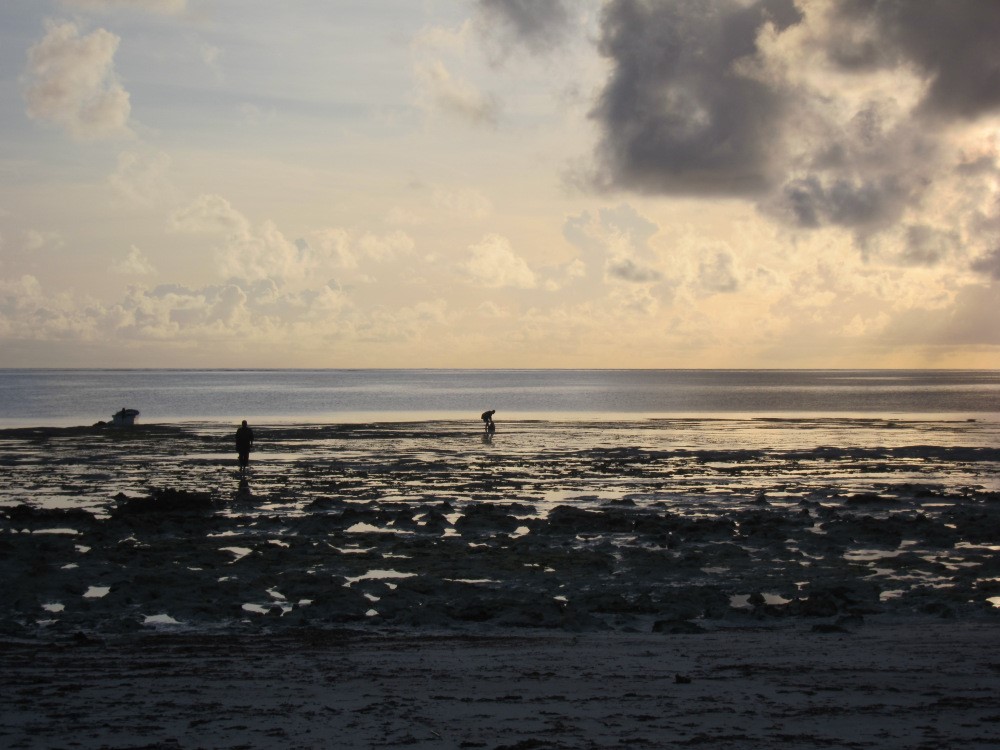
    Many years ago, when I was a hotel manager at a resort in a national marine park, I was roundly castigated for employing poachers as guards and fishermen as boat operators for our visitors. The prevailing sentiment was one of enforcement to protect the national marine park – and the expulsion of the local people. While we had made significant strides in improving enforcement, the local people were facing a social challenge – they had no alternatives. 

    The recent Interim Policy on Forced Labor, Child Labor, or Human Trafficking by Fisheryprogress.org is a reminder of the challenges the seafood conservation community is facing in the 21stCentury. It is an important step forward for Fisheries Improvement Projects which seek to secure seafood sustainability and it is encouraging to note the role of Conservation International (CI) in developing the Social Responsibility Assessment Tool for the Seafood Sector (full disclosure – I am a former employee of CI). However, I would propose that while it is essential to know that we are “doing no harm” we also need to understand the implications of the decisions inherent in effective FIPs and need to ensure that fishery participants either have a stake in the upside or have an alternative source of income.

    Fisheries Improvement Projects (FIPs) have historically focused almost entirely on environmental metrics to date. One of the central issues associated with effective FIPs relates to good governance of the fishery. While there are a myriad of issues associated with “good governance”, I would propose that the willingness of local leaders and harvesters to adopt less impactful fishing practices is directly proportional to their financial gain and  / or to their alternative opportunities. 

    In most of the FIPs we have reviewed or surveyed, there is no mechanism for harvesters to secure any hypothetical “upside” and they have woefully few alternative opportunities. They simply have no way of adapting to the changes – a factor that remains unaddressed in the current FIP framework. Faced with this, is it any surprise that national and local governments are slow to enforce environmentally appropriate regulations? 

    So, while we congratulate Fisheryprogress.org on this step forward, it is important to keep the broader picture in mind – in an era of dwindling fish stocks, growing populations, fragmented global markets and populist leaders, the likelihood of “environment only” or “no negative” approaches succeeding in restoring fisheries is slim to none – and risks being passed as irrelevant. The sooner we can begin to address the social and financial implications of seafood sustainability, the sooner we will see these initiatives succeed. 

    Oh – and that marine park? Watamu Marine National Park and its numerous supporters continue to develop innovative solutions to turtle conservation and marine protected areas.

  • LEVERAGE LEAD FIRMS:          ENDURANCE AND EFFICIENCY

    LEVERAGE LEAD FIRMS: ENDURANCE AND EFFICIENCY

    Lead Firm Pilot Projects

    When we evaluate value chains, we look for lead firms: small, medium, or large enterprises that are linked to many other players in the value chain and can influence the practices of these commercial partners. Ideally, these firms are thought leaders in their fields and open to innovation. Building on our value chain and market research, we work with these firms to lead by example. We collaboratively design and implement pilot projects that help overcome barriers to triple bottom line business growth.

    Through these projects, we test our research findings, learn more about what will work on the ground, and iterate on real-world solutions. These pilot projects not only improve business practices within the lead firm, but throughout the fishery value chain. When successful, they generate financial returns that demonstrate the viability of new approaches in the industry and inspire other businesses to follow suit, thus improving industry competitiveness. They create new norms in the market that are sustained because of their business value rather than relying on ongoing philanthropic support or government subsidies to succeed.

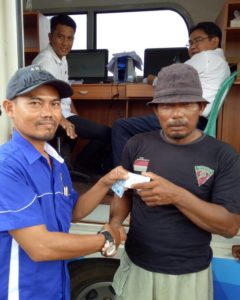
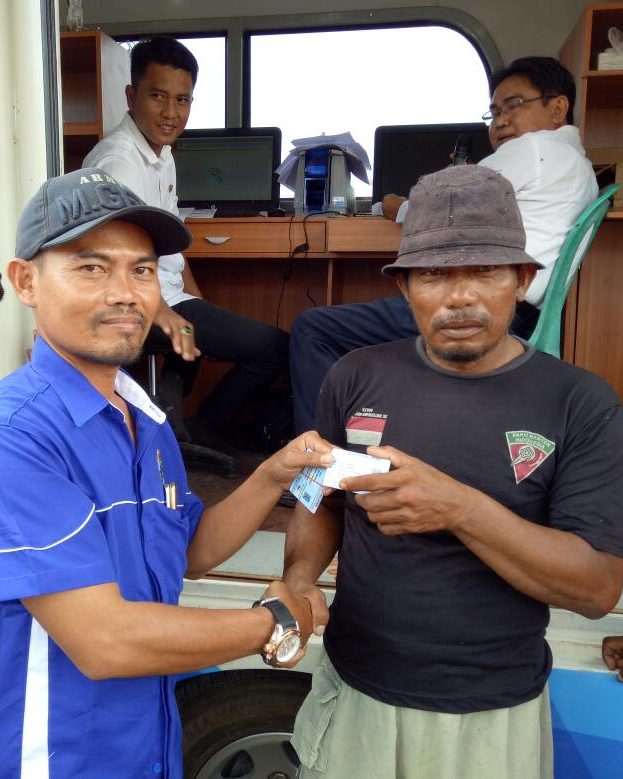
    Crab fishermen in Indonesia receiving their “Kartu Nelayan”, guaranteeing their access to benefits such as life insurance

    Role of Lead Firms

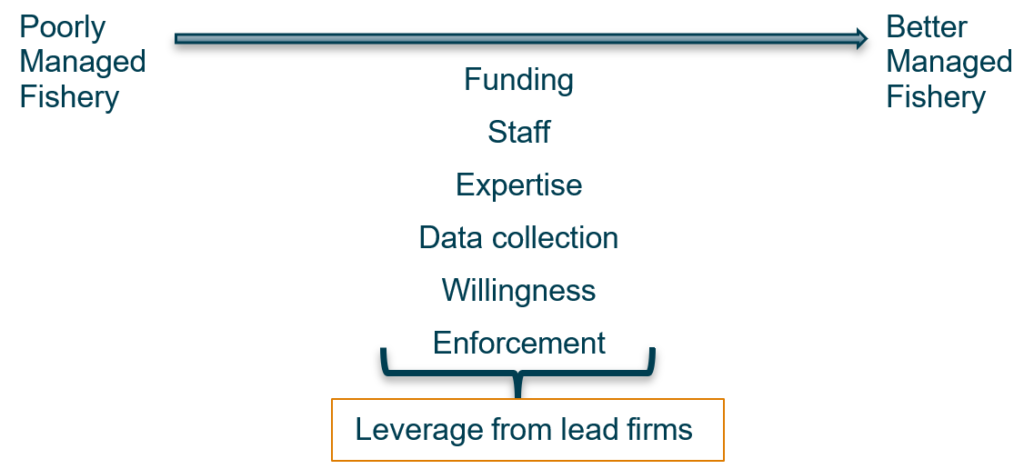
    Sustainable and profitable fisheries are built on secure tenure, sustainable harvests, and monitoring and enforcement, according to research behind the report, “Towards Investment in Sustainable Fisheries”. Rather than waiting indefinitely for these enabling environment conditions to transpire, using a lead firm approach allows project developers to leverage the assets and abilities of industry to progress towards better managed fisheries. In return for their contributions, lead firms in fisheries promote decreased supply volatility; increased long-term availability of the resource; improved supply chain efficiency, and more.

    Lead Firm Project Goals and Benefits

    Wilderness Markets’ goal with lead firm projects is to attract private, return-seeking impact investment and complement ongoing work by fishery managers and NGOs to improve fisheries. This approach enables local fishermen to adopt sustainable practices faster than waiting for the government to independently create and enforce management changes, and without the economic hardship for fishermen that often accompanies changes in fishery regulations. It will also bolsters business advocacy for more effective fisheries management policies and enforcement through a local cooperative structure.

    Lead Firm Experience

    From 2016 to 2017 we engaged with a lead firm, Blue Star Foods, in the blue swimming crab fishery in Indonesia. Our primary goals were to engage a lead firm to secure change on the water and development an investment model. We gained some valuable learnings, including the importance of fisher organizations; the need for ongoing, structured and unstructured facilitation between stakeholders; and the importance of pre-agreements for data collection analysis, and management.

    Parallel Approach
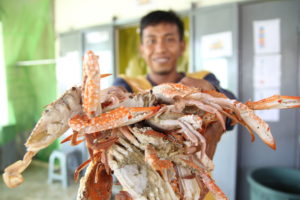
    Sumatran Fisherman with Blue Swimming Crabs

    By working with a lead firm, the financial viability of data collection and management was validated, and many of the improvements in the value chain have continued to date, despite the project ending in 2017. [

    For the fishermen, participation in the project included signing up for the Indonesian fisher ID card – Kartu Nelayan – which conferred immediate benefits to the fishers, such as life insurance. The government also benefitted from getting better counts of fishermen in the area. Through their participation, harvesters were provided clear and reliable financial benefits for small-scale fishermen to make gear changes; follow harvest control measures; and take on other sustainable fishing practices.


    Successful Lead Firm Characteristics

    • Industry leaders: innovation, technology, experience
    • Highly connected in the value chain: linked to large numbers of producers
    • High capacity: can provide technical assistance, credit and inputs
    • Financially stable: can make long-term investments towards sustainability
    • Excellent market access and understanding: connected with multiple markets (to decrease risk) and routinely attend industry events and conduct analysis to stay attuned to market dynamics
    • Respected influencer: others in the industry look to them for thought leadership and hold them high esteem
    • Willingness: firm indicates a willingness to work with project developers, including signed agreements

    Adapted from: “Integrating Very Poor Producers into Value Chains: Field Guide” by USAID, fhi360 and World Vision, October 2012.

  • IPBES global report: Species extinction rate is accelerating

    This recently released report makes for sobering reading for all.

    One of the key challenges we will all face is how to address the challenge of climate change, environmental conservation, poverty and population. Focusing exclusively on environmental impacts and ignoring the financial and social impacts is not only sustainable, but counterproductive to achieving environmental objectives.

    This is why we are working with a range of stakeholders to develop and test “triple impact FIPs” that address not only the environmental outcomes, but also the social and financial outcomes of the participants in global seafood supply chains.

  • Blue Star Foods initiative shows 3BL efforts work

    Blue Star Foods initiative shows 3BL efforts work

    lead firm crab
    BSC fisherman with new vessel tracking device

    Blue Star Foods, the Miami, Florida based seafood specialist, is proving that it is possible to have a sustainable and profitable business in the seafood industry.

    The title of a recent article posted on Under Current News sums it up: Blue Star Foods’ founder sees ‘3BL’ effort resonating more with crab buyers.

    In 2015, Blue Star Foods partnered with Wilderness Markets to develop their Triple Bottom Line (3BL) strategy. The company wanted to design and implement appropriate financial and social incentives to enable fishermen in their supply chain to transition faster to sustainable fishing practices. Through its purchasing power and relationships, Blue Star was in a strong position to influence the practices of a range of processors who have commercial relationships with a network of mini-plants, collectors, and fishermen. We designed and tested a pilot initiative in one site in Indonesia, which has since been expanded.

    Triple bottom line refers to the idea of pursuing environmental, economic, and financial goals simultaneously. Our work often centers around the research and data collection needed to modify or create a value chain that fosters this model with existing practitioners.

    “We chose to work with Wilderness markets to develop our 3BL strategy because of their experience with impact investing AND expertise with wild-caught fisheries. That foundational work has made implementation a success.”— John Keeler, Executive Chairman & CSO, Blue Star Foods

    For Blue Star Foods, our work helped the company originate, design and develop the strategy (find the report in more detail here).

    They have implemented it with vigor, and it’s paying off.

    After only two years, they are seeing progress in the sustainability of blue swimming crab fisheries in Indonesia and have expanded their efforts to include the Philippines. In the process, these sustainability practices are positively impacting the social well being of harvesters and workers, and improving sales to more large-scale foodservice, retail and institutional buyers.

    Read the article to learn more about the impact Blue Star Foods has seen and how companies may integrate the benefits of developing and implementing 3BL strategies.

  • Dr. Richard Leakey – Presentation on Conservation

    Dr. Richard Leakey recently presented some thoughts on conservation in Cape Town at the 2017 Conservation Lab.

    He made some excellent comments regarding the current and future challenges of conservation in the age of climate change, population growth and prosperity that need to be incorporated into many Conservation NGO strategies and agendas (particularly in fisheries).

    I hope you enjoy it as much as I did – its worth the time.

  • Investing for Sustainable Fisheries Needs Funding for Capacity Building

    Investing for Sustainable Fisheries Needs Funding for Capacity Building

    Impact investors are ready to invest increasing amounts of impact capital in sustainable fisheries; what’s missing are  profitable businesses and organizations with the capacity to accept investment. These profitable “investible entities” aren’t emerging apace because the entrepreneurial ecosystem to develop their business capacity is lagging.

    (more…)

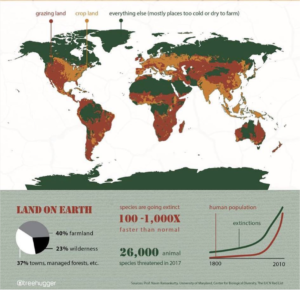
  • Is this what success looks like?

    An ongoing discussion between people in the conservation finance community is how we define success.

    Reviewing the data – which we like to do (see below) – does not demonstrate much success in addressing species or biodiversity loss.

    Perhaps it is time for a review of what has really worked in the conservation finance. Not only do we need to contend with increasing resource demand and population growth, but now we have to increasingly address the impacts of climate change on these less than resilient ecosystems.

    If this is what success looks like, I would hate to see failure.

    Image Courtesy of Treehugger & Racing Extinction

  • Marine Heat Waves More Common and Lasting Longer Globally

    Marine Heat Waves More Common and Lasting Longer Globally

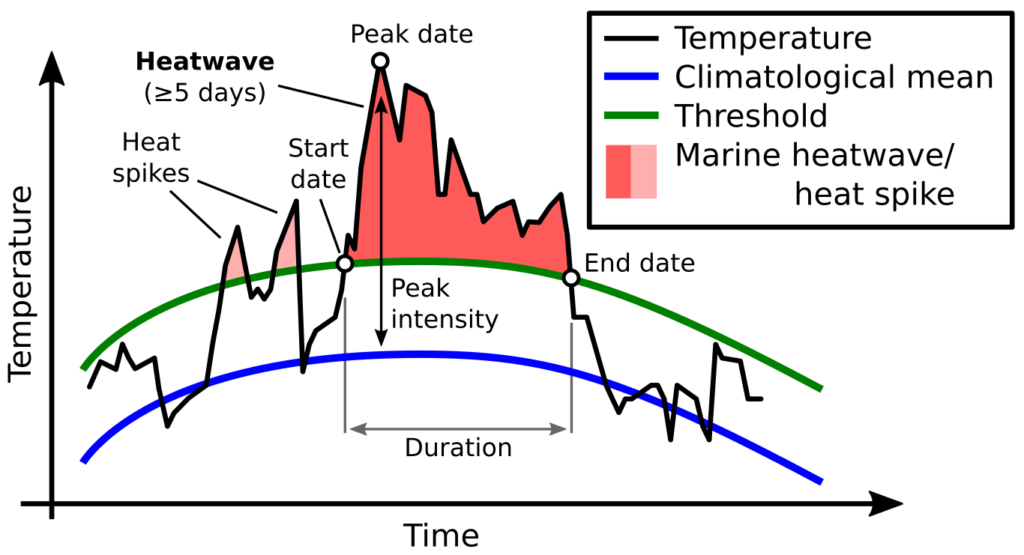
    A study done by the Marine Heatwaves International Working Group showed that there has been a 54% increase globally in the number of “marine heat wave days” per year since 1925.[1] Published in the Nature Communications journal and cited in News Deeply recently[2], the study cited the warm zone off the Western Australian coast in 2011 and the Gulf of Maine episode in 2012 as incidences of this trend. Average ocean temperatures have been increasing but these marine heat waves are also increasing in frequency and duration. The combination of the two are linked to factors that damage ecosystems and economies.

    Figure 1 Graphic explanation of Marine Heat Waves, from http://www.marineheatwaves.org/all-about-mhws.html

    Marine heat waves (MHWs) are “…prolonged periods of anomalously high sea surface temperatures… [that] have had severe impacts on marine ecosystems in recent years.” (Oliver et al., 2018). In Australia alone, Shark Bay in Western Australia lost 36% of its seagrass meadows and carbon storage, and the Great Barrier Reef suffered four mass coral bleaching events because of these extended periods of elevated sea surface temperatures.[3]

    There are significant ecological and economic effects arising from these marine heat waves. They include:

    “… sustained loss of kelp forests, coral bleaching, reduced surface chlorophyll levels due to increased surface layer stratification, mass mortality of marine invertebrates due to heat stress, rapid long-distance species’ range shifts and associated reshaping of community structure, fishery closures or quota changes and even intensified economic tensions between nations.” (Oliver et al., 2018)[4]

    According to Eric Oliver, the study’s lead author, “…in the early 20th century, there was an average of two marine heat waves per year globally, but now there are three or four. While they used to last 10 days on average, they now last for an average of 13 or 14 days.”[5]

    The study suggests that marine heat waves will continue to increase with the ongoing global warming.

    Why does Wilderness Markets care about anemones and anemonefish? Because our work requires us to look not only at enterprises and fishery management, but at the entire ecosystem to properly account for business risks. Learn more about us.

    [1] Oliver, E. C. J et al. (2018). Longer and more frequent marine heatwaves over the past century. Nature Communications, 9. doi: 10.1038/s41467-018-03732-9

    [2] News Deeply. (2018). Executive Summary for April 13th. Oceans Deeply (Marine Heatwaves Are Longer, More Frequent). Retrieved from https://www.newsdeeply.com/oceans/executive-summaries/2018/04/13.

    [3] McSweeney, R. (2018). Marine heatwaves have become ‘34% more likely’ over past century.  Carbon Brief. Marine heatwaves have become ‘34% more likely’ over past century. Retrieved from https://www.carbonbrief.org/marine-heatwaves-have-become-34-more-likely-over-past-century.

    [4] Oliver, E. C. J et al.

    [5] Willick, F. (2018). Ocean heat waves becoming more common, longer, new study finds. CBC. Retrieved from http://www.cbc.ca/news/canada/nova-scotia/marine-heat-wave-ocean-hot-spot-study-1.4611794