hacklink hack forum hacklink film izle hacklink jojobetsahabetchicken roadnakitbahisjojobetgalabetnakitbahisholiganbetgalabetSweet bonanzaStreameastdeneme bonusuCasibomenbetz-lib zlibrary 1lib b-ok websitematbetlunabetlunabetjojobet girişjojobet girişjojobet girişjojobetlunabetjojobet girişholiganbet

Blog

  • Projected change in global fisheries revenues under climate change

    A recent paper (September 2016) in the scientific journal of the National Institutes of Health exploring the implications of climate change on global fisheries revenues provides some sober reading.

    The report explores how fisheries revenues of maritime countries will be impacted by climate change as a necessary  “crucial next step towards the development of effective socio-economic policy and food sustainability strategies to mitigate and adapt to climate change”.

    The report shows “that global fisheries revenues could drop by 35% more than the projected decrease in catches by the 2050 s under high CO2 emission scenarios. Regionally, the projected increases in fish catch in high latitudes may not translate into increases in revenues because of the increasing dominance of low value fish, and the decrease in catches by these countries’ vessels operating in more severely impacted distant waters. It finds that developing countries with high fisheries dependency are negatively impacted.”

    See: Lam, Vicky W. Y. et al. “Projected Change in Global Fisheries Revenues under Climate Change.” Scientific Reports 6 (2016): 32607. PMC. Web. 18 July 2017.

    The significantly higher impacts on developing country revenues both for export and domestic consumption are documented in the paper and provide further evidence to the risks climate change creates for wild capture fisheries.

  • Coral Reefs and Ocean Health

    Every so often, we run across reports that force us to stop and question our assumptions. Recent papers on global warming and the impact on oceans is a topic we have been monitoring for a couple of years now, with each new paper more depressing than the last.

    It is our view that the role of ocean warming on stock health, and by extension, investment risks associated with stock health is either ignored or underestimated in most wild capture fisheries investment models.  However, with little information on which to base this assumption, it has been difficult to express this disconnect. Furthermore, most of the impacts are felt at the base of the supply chain  – by fishers and fishing firms.

    A recent open paper in the journal Nature provides some interesting context. Titled “Coral reef degradation is not correlated with local human population density”, the research appears to “suggests that local factors such as fishing and pollution are having minimal effects or that their impacts are masked by global drivers such as ocean warming” and …. “findings indicate that local management alone cannot restore coral populations or increase the resilience of reefs to large-scale impacts. They also highlight the truly global reach of anthropogenic warming and the immediate need for drastic and sustained cuts in carbon emissions.”

    If these findings are true – and we are unsure there is scientific consensus around them – it will have significant implications for wild capture value chains, local populations and for the range of local and community based efforts attempting to address overfishing through local management.

    We would welcome comments or thoughts on this paper, which can be accessed at this link.

    Bruno, J. F. and Valdivia, A. Coral reef degradation is not correlated with local human population density. Sci. Rep. 6, 29778; doi: 10.1038/srep29778 (2016).

  • Sustainable Fisheries – the role of the fishermen

    Significant attention is being paid to the oceans. Between the UN Oceans Conference as the recent Economist leader, attention is (finally!) being given to the significant and numerous benefits and threats to the worlds oceans.

    At a time of increasing populations, increased demand for healthy proteins – and arguably a climate imperative – human consumption of seafood is increasing exponentially. Wild capture seafoods are increasingly losing ground to aquaculture raised seafoods, for better or worse.

    So why should we continue to care about wild capture seafoods? Isn’t sort of like expecting we should still live off wild buffalo and antelope?

    It is – and the problem is, many emerging market countries are still dependent on wild capture fisheries for social, political and economic outcomes. Many emerging market economies depend on a sustained source of seafood to address social and poverty concerns. Fisheries related political decisions –in the form of subsidies and / or gear – are good politics at election time. And the national and global supply chains themselves are valuable sources of foreign currency in many countries.

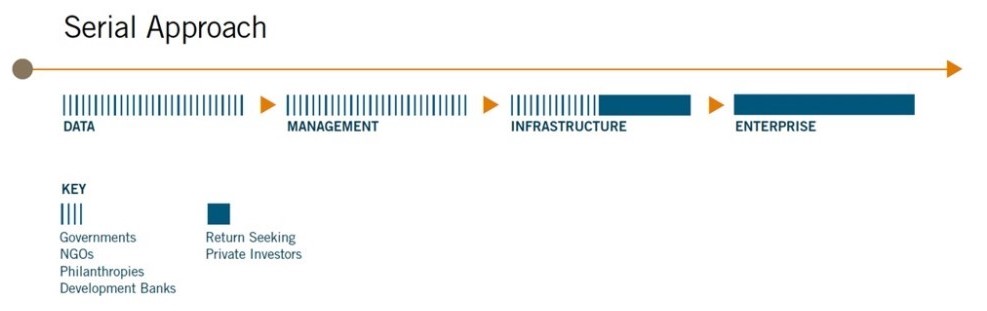
    While significant progress has been made to improve fisheries management in developed countries with strong rule of law, challenges remain on the open ocean and in many emerging markets. As summarized in a series of reports we completed, these challenges cut to the core of why fisheries remain “unmanaged”. We would argue that a developed world, legal first approach (which we call the “serial” approach) will not work in many emerging markets.

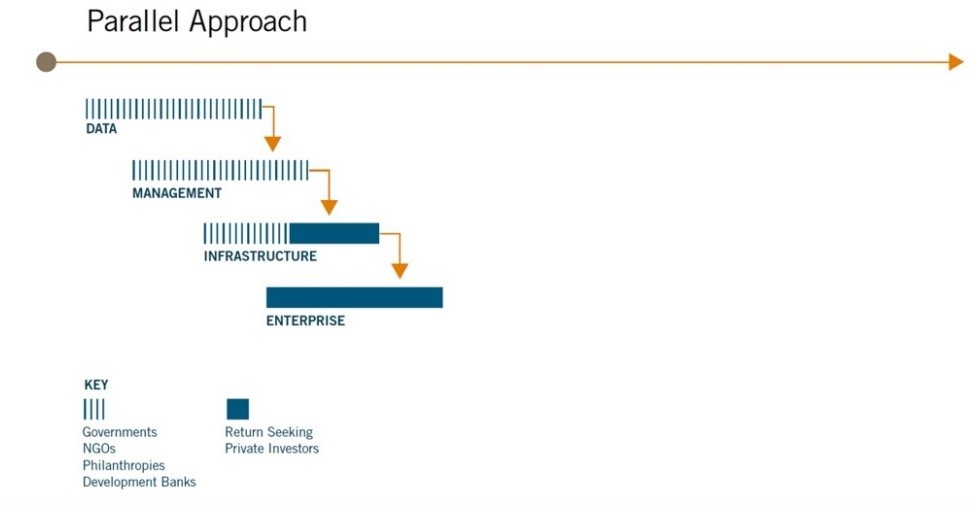
    What is instead needed is a concerted effort to engage fishermen, gather reliable data and find culturally appropriate solutions in conjunction with the supply chain. These efforts can be complimentary – and inform – efforts to address legal and regulatory requirements in “parallel”, allowing fishermen to realize the benefits of changes in practices, presenting value chain actors and regulators with clear data on landings, and doing so in a culturally appropriate manner.

    Our recent efforts in the United States and in Asia continue to support this theory.

    In the United States, now that the west coast groundfish fishery is in recovery, fishermen face the reality that the market price is below the cost of landing the fish as management costs have increased while revenues have remained flat (or declined when adjusted for inflation) for the higher volume species. The market, in effect, compares US groundfish to imported white fish and sets the price at the lower of the two, in large part due to the volumes, but also due to the lower costs of imports. Unless prices and market access improve for US groundfish fishermen, its unlikely many of them will remain in business (and this in turn will imperil the funding of the fisheries management system).

    In Indonesia, the bigger challenge relates to the lack of registration of fishermen and vessels, poor landings data and limited data on fishing sites and practices, particularly in artisanal fisheries which are increasingly being drawn into national and global supply chains due to the increased demand. In many countries, fishermen are essentially unregistered, have limited access to services and are not legally recognized. In nearly all the emerging market value chains we reviewed, the first legally recognized stage of the value chain was the aggregator or middle person. This legal recognition is important – it enables access to government and private services and it allows managers to define and engage with users.

    It will continue to be challenging to manage these historically productive fisheries unless these challenges are addressed in a culturally appropriate manner.

    Wilderness Markets is developing a range of measures building on the interests of fishermen that address these challenges in US and developing country fisheries. These include improving market access and recognition for fishermen with industry; addressing fishermen registration and organization; ensuring good data is collected and made available to all relevant parties as well as aligning economic incentives. An essential underpinning of all this work is the need to engage with, and facilitate, changes in practices in existing firms.

    As we are seeing in our work, systems change is possible, it takes the combination of a bottom up approach and a systematic assessment of metrics to keep everyone on track.

  • Lessons Learned – Indonesia’s Blue Swimming Crab Fishery

    Wilderness Markets has recently completed a “lessons learned” document regarding our experiences working with a lead firm in Indonesia to develop and implement sustainable fisheries practices for the Blue Swimming Crab fishery in Lampung Province.

    The presentation provides an overview of our theory of change, our focus and goals and the key lessons learned during the course of this work. Building on the “parallel” approach to fisheries reform, it specifically integrates harvesters, communities, local leadership and industry representatives in developing and implementing sustainable fisheries practices.

    The English version of this report is available for download, as is the Bahasa Indonesia version.

    We are grateful to the David and Lucile Packard Foundation for their support of this work.

  • How Crabs, Fishermen, and Bankers Benefit from Better Data in Indonesia

    In our previous post, we discussed why we and others have concluded that good data is crucial to fisheries management and investment decisions. This post dives deeper into our work to incorporate better data collection, analysis and availability into the Indonesian blue swimming crab (BSC) fishery.

    How many fishermen are there? Where are they fishing?

    Is this gear actually catching larger crabs? Is the gear cost-effective?

    If we want to invest in improvements, how can we figure out if there will still be enough crabs to catch in the future to provide revenue? How risky is the investment?

    These questions are ones we asked as we started working with a lead firm in Lampung, a province in South Sumatra, Indonesia. The answers to these questions were not available. Therefore, we’re helping to find the answers through a mobile data collection app to create better data.

    About the fishery

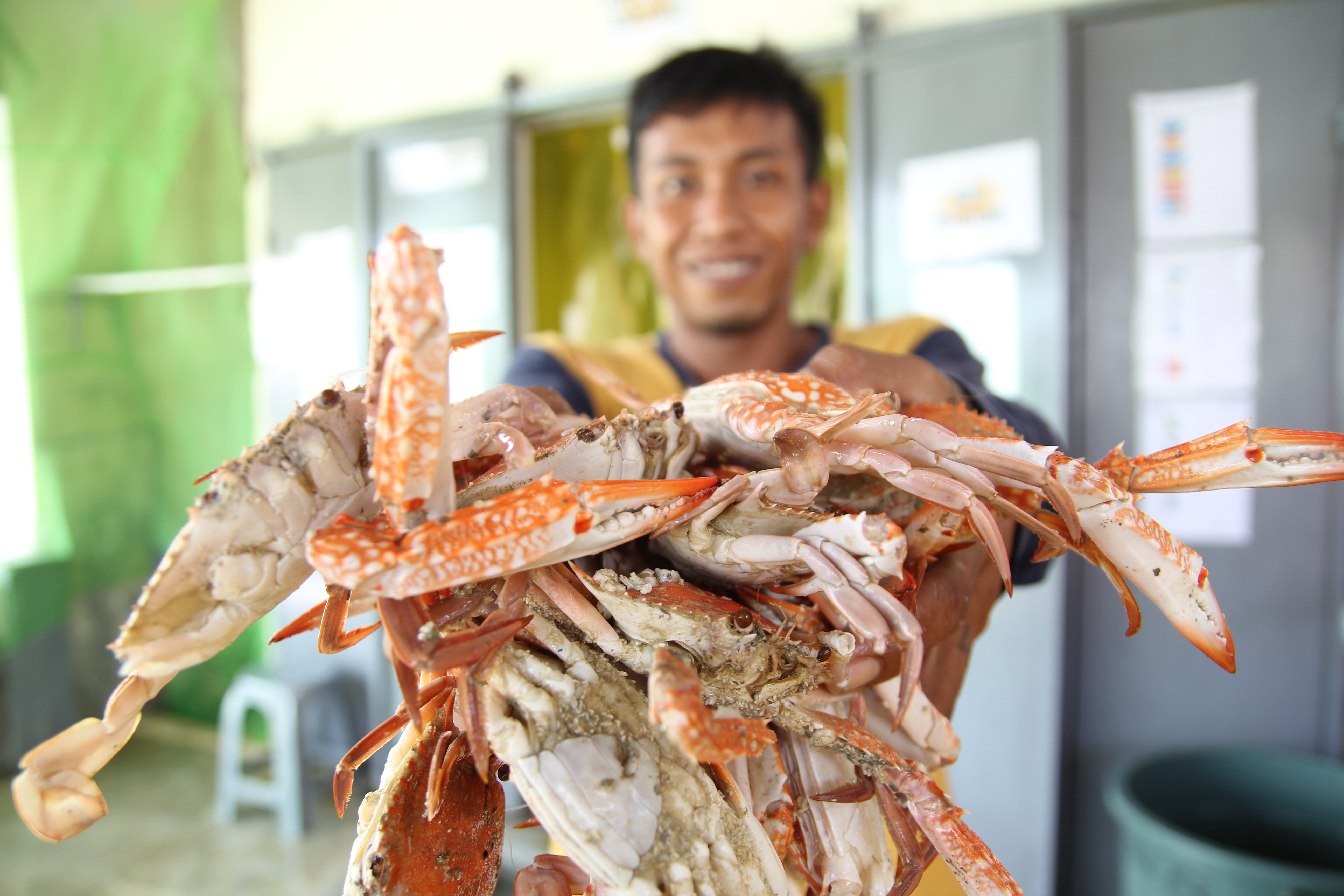
    Blue swimming crabs (BSC) is an important source of revenue for fishermen who sell their landings into the export-oriented BSC value chain. Since BSC first started being harvested commercially in the Lampung area, crab sizes at capture are reportedly getting smaller and there are fewer of them, indicating a stock that is or is becoming overfished.

    BSC only require a short time between successive generations (less than 2 years). That, combined with their relative lack of mobility, mean that conservation efforts will have more immediate results than a fishery like snapper or tuna.

    Why this fishery is a target for impact investment

    The high value of crabmeat and the short time window for stock recovery translate to higher likelihood of return on investment. Investments in fisheries, if done from an impact orientation, can readily incorporate triple-bottom line outcomes that incorporate environmental, economic, and social returns.

    Environmental: Improve the availability of crab through improvements to stock health.

    Economic: Achieve a market premium through differentiation based on transparency, traceability, and sustainability

    Social: Involve harvesters  in management and compensate them for the costs associated with adopting more sustainable practices

    Each one of these impact areas requires better data for design and monitoring and evaluation.

    What we’re doing to improve investability

    The fishery needed more data to help with management and de-risking investments, but the mechanism had to be:

    • easy to use
    • affordable
    • replicable
    • scalable

    The data needs to:

    • answer questions about stock health
    • provide traceability and transparency
    • be easy to access and share with multiple stakeholders, including private companies, multiple governments and NGOs.

    Working with our lead firm partners, we created a mobile app for use on Android or iOS devices. The app will provide information to prove both transparency and traceability. Because of the platform, it can easily be tweaked to use in other geographies and fisheries as well as being useable offline – a must for developing country fisheries.

    Value chain use of the data

    Industry can use the data for monitoring and enforcement of regulations. In Lampung, there are agreements not to land or buy crabs that will negatively impact stock health. These agreements forbid landing berried females and crabs less than 10cm. There are also agreements to support gear change from gill nets which will allow for a more selective harvest. Data collected through the app will therefore be used by individual companies to validate and verify these requirements.

    Companies will use the data collected to guide buying strategies to protect stock health and increase price premiums. Data indicate where the best size crabs are being landed and the firm encourages buying from those areas. They are also planning to provide rewards to help fishermen to purchase sustainable gear.

    Environmental impacts of the data

    On the more environmental side, data can be accessed by fishery managers for determining appropriate access and effort controls which will impact stock health. Managers can use the data for determining local seasonality based on size and sex of the landings; this, in turn, can help determine the crucial times and locations for fishery closures. The efficacy of gear change on landings can also be assessed using the data.

    Not only can government use the data, if aggregated appropriately, the NGO community and private companies can use it for their conservation and development programming.

    Social implications of data collection

    The app collects data about the fishermen, including their basic contact information, landings data, and vessel affiliation. The landings data for individual fishermen will serve as a record of their income from BSC fishing. Accordingly, financial institutions, like banks, can use this data to determine their bankability.

    Circling around – how does this relate to the broad issues of improved management and investment?

    Management will benefit from better data on size, sex, landed weight and geography for localized management plans. Stock assessments will also improve with better data. Also relevant, the process of data collection has helped identify unregistered fishermen. Because of this, they can be provided with the opportunity to register for their federal fisher i.d. card (“Kartu Nelayan”). Among other things, this gives fishery managers a better sense of the number and characteristics of fishermen in the area so that efforts to manage the fishery will include them.

    Implications for investment are multi-level. At the company or even industry level, investors can use the landings data for individual companies. In addition, the improved stock assessments and record of the expected recovery will serve them when determining value chain investment risk. Correspondingly, at the personal level, the data contributes to financial inclusion for the fishermen: it serves as a record of income for fishermen to banks and having their Kartu Nelayan gives them the opportunity to receive potential government benefits.

    What’s next for better data

    In this fishery specifically, we’re working to address legal issues related to data collection, ownership and sharing in cooperation with the ministry of fisheries and aquaculture and NGOs active in the fishery. At the same time, we want to ensure the ongoing usefulness of the data mechanism we’ve helped to develop.

    We’ve also developed an investable model, designed for philanthropic and impact investors.

    To stay updated on our efforts to capture better data or learn more about the investable model, subscribe or send us an email. Both options are below.

  • How Poor Data is Holding Back Fisheries Reform AND Impact Investors

    How Poor Data is Holding Back Fisheries Reform AND Impact Investors

    The Problem(s)


    Poor management of fisheries is calculated to result in losses of USD $83 billion to the world economy each year. As cited in many other fisheries papers, data indicates an alarming proportion of fisheries, nearly 90 percent in 2013, are fully overfished, depleted or recovering, an increase from 75 percent just eight years prior.  Investments in fisheries could provide net benefits of USD $54 billion per year.

     If developing countries fisheries are to continue their role as a primary source of protein and income for millions, more than just public and philanthropic money must be invested in recovery and management.  Reform needs private capital. Unfortunately, there is a dearth of investable, risk-adjusted entities in sustainable fisheries that can meet triple bottom line goals. This then hampers participation of impact investment capital. Simply put, although there are investors with money, there are not nearly enough viable entities in which to invest. This challenge is further compounded by poor data.

    The Role of Data for Management and Investment


    Often bypassed in fishery initiatives, capturing good data is critical to both fisheries management and investment. Among other data points, management requires data about size, sex, species, nursery areas and seasonality to be able to manage the fishery to ensure continuity of the resource. Investors need to be able to assess risk to their prospective investments. For fisheries, this means understanding how well the fishery will perform in the future, i.e., whether there will be more fish in the sea and how many. Management data and investment data go hand-in-hand.

    Indeed, in “Towards Investment in Sustainable Fisheries”, the three key enablers of sustainable and profitable fisheries are secure tenure, sustainable harvests, and robust monitoring and enforcement, each of which relies on robust data. Investable entities and risk management are key requirements for investment that build off these enablers. Encourage Capital’s strategy for small-scale seafood investments also relies on interventions driven by data, including catch accounting systems, and product tracking and traceability.

     Lack of data is identified as one of the major concerns with regards to stock health and effective resource management in the major domestic and export fisheries of Indonesia, the number two producer of wild-caught fish in the world. Indeed, for industry, the lack of clear recommendations and supporting data is a significant issue from a decision-making perspective. This lack of data and analysis directly affects efforts to build consensus and accountability at all levels of the value chain.

    Stay Tuned…


    Data is critical to ensuring food security and income through better managed fisheries and investments thereto, which is why data collection, analysis and sharing is one of the focus areas of our work in Indonesia. Follow us to see our next post, where we share what we’re working on in to get better data in Indonesia.

  • Governance or a Markets Approach? Both. Adopt a Parallel Approach to Fisheries Reform

    Governance or a Markets Approach? Both. Adopt a Parallel Approach to Fisheries Reform

    In our previous posts, we’ve discussed reasons and ways for involving private capital in fisheries reform, including taking a lead firm approach. This post about the parallel approach is a direct follow-up to the three models we propose for investment sequencing; we recommend checking out that post first.

    Overview

    Is there only one way to make a fishery sustainable? We don’t think so. That said, we do know that there are some key areas that need support on the way to sustainability. Indeed, whether to consider a “governance” or “markets” approach to fishery sustainability is a false dichotomy. In areas where a market is present, which is most, governance and markets must be considered simultaneously and balanced for the short and long-term benefits.

    The working model we’re developing adopts a parallel approach to address the challenges associated with developing countries fishery reform. In this approach, the markets, and by definition, the private sector, are key partners. The commercial relationships with harvesters developed by this model are critical to ensuring support for long term fisheries reform given the lack of representation and organization at the base of the value chain. We explain our thinking in more detail below.

    Approaches to Management

    Under ideal circumstances, fisheries reform would have a “serial” approach to design, implement, and enforce regulations. Scientific and economic data would be the bases for robust fisheries management. With reasonable assurance that stocks will not be overfished, value chain participants can plan investments in tandem with stock recoveries.

    Serial or Parallel Approach?

    Emerging market fisheries face significant social and political concerns to the serial approach. For example, legislating changes that result in reduced fishing effort to promote species and stock recovery has political and social ramifications that not all governments are prepared to address. Furthermore, the cost of enforcing such changes are likely to be higher than what is considered normal – both in monetary and social terms.

    Parallel Approach

    Given the desire to reform fisheries while also demonstrating the economic benefits associated with such reform, we propose that a “parallel” approach may be more appropriate in emerging markets. In this approach, different actors work in tandem to develop and implement measures to increase sustainability.

    What’s are the Management Basics?

    Investments to improve data and management are primary concerns for fisheries reform as these will demonstrate the success and costs of various efforts. Though species, geographies and cultural norms vary, there are some agreed-upon fishery management principals which will be informed and supported by good data. These include five parameters for:

    1. size,
    2. sex,
    3. seasons,
    4. geographies and
    5. ability to access to the fishery.

    Generally, social and legal changes necessary to create and enforce these management measures increase as complexity and distance from the resource increases. The degree to which the value chain can enforce them runs in the opposite direction. That is, the value chain has the greatest potential to enforce size, sex and seasons, but their ability to enforce rules decreases for geographic restrictions and even more so for access control. Rulemaking must involve local society and governments, and their participation is particularly important for complex tasks like access and geography restrictions.

    The blue swimming crab (BSC) fishery in Indonesia is a good example of a parallel approach opportunity that currently engages both the value chain and government. National government has already adopted and passed restrictions regarding size and sex. The challenge now is how best to implement and enforce these efforts.

    Working Model

    In our parallel approach model, value chain stakeholders in Indonesia have begun gathering data to help inform and reinforce decision-making. At the same time, the provincial government, in cooperation and communication with the local community, will set standards and provide enforcement for the five parameters. Managing seasonality, geographic limits and access restrictions are also actionable through the value chain. However, these will require a higher degree of social acceptance, enforcement and value chain adoption. Good data from working closely with cooperatives and harvesters will provide foundation for the harvest control strategies. We envision starting with the easiest strategies first, essentially moving from 1 (size) down to 5 (access control) over a period of less than four years for creation and testing of the rules. It is imperative that the local government and community create the standards to ensure the lead firm can work to establish sustainability within the fishery.

    The value chain and lead firm approaches provide a valuable opportunity to implement effective enforcement needed to achieve sustainability. Value chain participants can insist on the adoption of these standards, which may then be verified based on effective data collection and using internal and external audits. The current working model also includes a proposal for the lead firm to make purchases through a preferred supplier network currently formed as a cooperative. Consequently, access to finance for value chain stakeholders will be contingent upon their compliance with the rules. Working in collaboration with local cooperatives and harvesters, the economics of this fishery are such that all participants should benefit from improved BSC size and  abundance.

    Final Thoughts on the Parallel Approach

    Ideally, government would provide the necessary framework and policies to implement these strategies, while providing effective enforcement as in the serial approach to reform. However, in the absence of this involvement, providing market-based opportunities to adopt these measures in a socially acceptable manner may provide a viable alternative approach, which is why the parallel approach is the most viable in many fisheries like BSC in Indonesia.

  • West Coast Groundfish Pilot: What’s Next for Developing Local Markets?

    West Coast Groundfish Pilot: What’s Next for Developing Local Markets?

    A previous post outlined the results of the recent market demand research for West Coast groundfish. This post follows-up with more detail on the proposed West Coast groundfish pilot.

    Purpose and Intent

    And now what? That was our first question after learning the results from the market demand research. Those results indicated that next efforts to improve demand and pricing for West Coast groundfish should focus on selling minimally processed products to suppliers and buyers in the grocery retail and full service restaurant sectors. The answer is a pilot project; one designed to test the findings which will help U.S. West Coast fishermen expand into regional market.

    This project would aim to raise commercial buyers’ and suppliers’ awareness of U.S. West Coast Groundfish as a domestic, sustainable source of whitefish and prove that these fisheries can provide a reliable supply of local fish. As a result, it will establish new markets and demonstrate the benefits and availability of West Coast groundfish to other buyers and suppliers.

    Rationale

    A pilot project, with defined sales periods and goals, will provide room to experiment to build relationships and to understand the market dynamics. Without a pilot, it will be difficult, if not impossible, to rally collaborative action or justify further investments in the fishery. Harvesters and buyers envision a pilot as being a first step in creating an ongoing sales effort that expands beyond the West Coast within two to three years, possibly sooner.

    A successful pilot is key to having larger, sophisticated customers purchase significant quantities for a substantial part of their operations; the pilot also develops the tools they need to successfully use and continue purchasing the fish. Assuming the pilot results in positive values, harvesters, trusts, buyers, NGO’s, and potential investors will have information necessary to make decisions about infrastructure, marketing and other investments. In addition, they can start sizing-up plans in the local, regional and national markets, all of which are important to increasing quota attainment.

    Framework

    To create organizational capacity that endures beyond the period of the pilot, it needs to be structured carefully. The fishermen and the buyers need to feel comfortable with their roles and build knowledge useful for future efforts. Because of this, the pilot project will endeavor to work within the existing supply chain to build the ability of the harvest groups and processors to provide reliable supply. Memorandums of understanding and contracts for the pilot have to be written so all the parties involved understand their roles and feel comfortable with their responsibilities. Of utmost importance, the pilot design must incorporate a way for the value chain to continue the work after the pilot concludes.

    Target Outcomes

    Some specific questions the pilot should be designed to answer revolve around the conditions and requirements for supply and pricing. At the outset, stakeholders will need to address legal restrictions on collaboration. The pilot should also define the incentives or conditions needed to gain cooperation between the processors and the groundfish harvesters. Also, the pilot should delineate the amount of fish, prices, and timing (flow of supply and seasons). Finally, the pilot will try to determine the level of transparency needed to build trust so that value chain actors can work together as a team to create value.

    Final Thoughts

    Regardless of who carries out the work, a pilot is the best next step for the West Coast groundfish stakeholders. The ultimate goals are easy – improve profits for those paying for management – but the route has to be carefully plotted. Building trust and knowledge and demonstrating improved values are key. We can get there, but we have to keep the focus on the end goal of a sustainable fishery, which means ensuring profitability for the harvesters.

  • Regional Demand and Opportunities for West Coast Groundfish

    Regional Demand and Opportunities for West Coast Groundfish

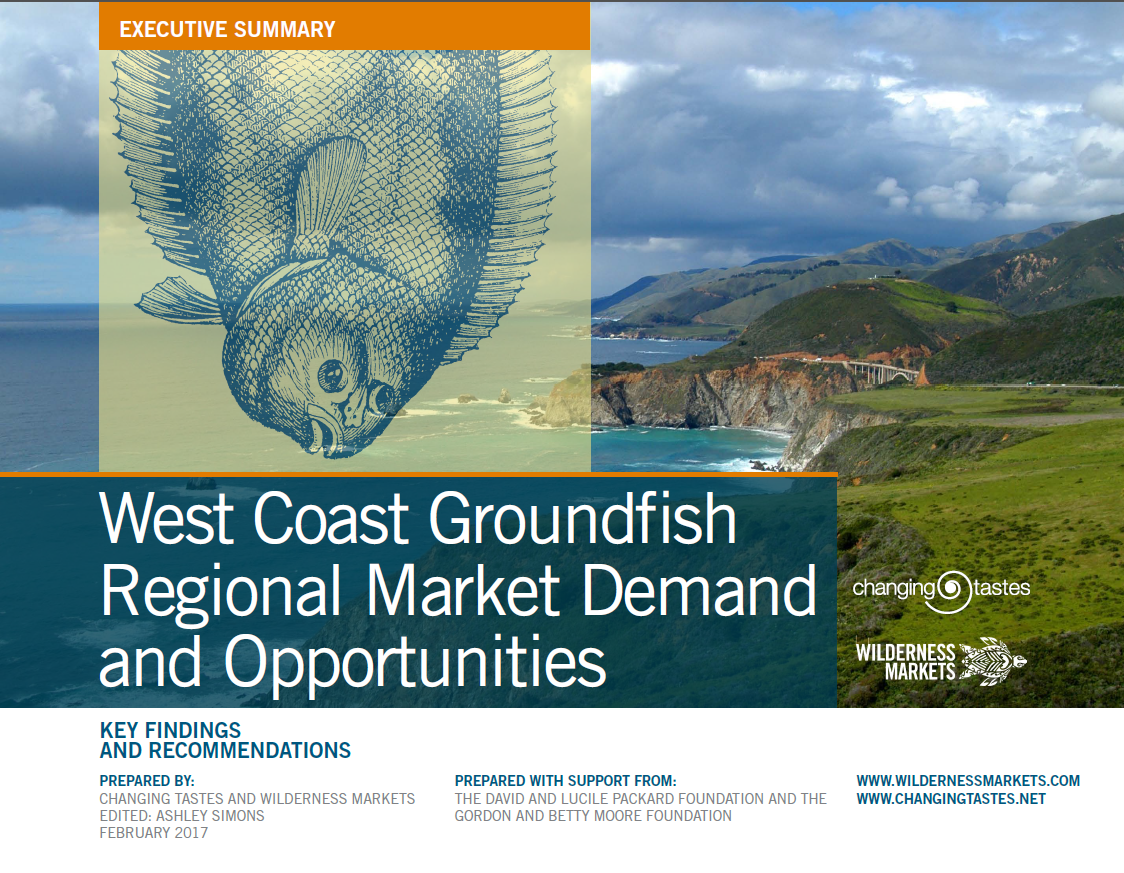
    Our latest project, West Coast Groundfish Regional Market Demand and Opportunities, explored the market demand for U.S. West Coast groundfish in Oregon, Washington, and California. This post is a brief summary of that work. For more, please check out the executive summary of the report.

    Background

    Faced with plummeting catch levels and fish populations near collapse, many fishing boats left the U.S. West Coast groundfish fishery in the 1990’s and 2000’s. Commercial seafood buyers on the West Coast then turned to other whitefish, including Asian tilapia and Alaskan pollock.

    Today, under new management systems, U.S. West Coast groundfish populations have rebounded and are fished sustainably – more than 20 species now rate as a “green, best choice” or “yellow, good alternative” with the Seafood Watch program, and 13 have received Marine Stewardship Council certification. With this conservation success in hand, how does U.S. West Coast groundfish regain a competitive market position and ensure that the recovery story includes economic success for fishermen?

    Several studies have looked at the production side of this question, outlining supply chain hurdles and infrastructure issues that keep fishermen from reaping higher prices. This study is the first to look at the demand side of the market: how much whitefish West Coast buyers purchase; what potential there is to sell sustainable, U.S. West Coast groundfish in these regional markets; and how fishermen can increase the price per pound that they receive for their fish.

    Methodology

    Through a combination of market analyses, buyer surveys, industry interviews, and expert review, Changing Tastes and Wilderness Markets examined the current demand for West Coast groundfish in Washington, Oregon, and California. We identified categories of commercial buyers (e.g., restaurants, retail grocery stores) and types of seafood products that hold the greatest potential to increase economic gain for fishermen. We also explored the key barriers that fishermen will need to overcome to sell more product in these markets.

    Results

    Our results shows that focusing on selling minimally processed products to grocery and full service restaurant sectors holds the greatest potential to improve sales and profits for U.S. West Coast groundfish fisheries. Consequently, the next logical step is to test these findings. To do so, and help U.S. West Coast fishermen expand into regional markets, we recommend the development and launch of a pilot project. This project would aim to raise commercial buyers’ and suppliers’ awareness of U.S. West Coast groundfish as a domestic, sustainable source of whitefish and prove that these fisheries can provide a reliable supply of local fish to West Coast markets. If successful, it will establish new markets and demonstrate the benefits and availability of West Coast groundfish to buyers and suppliers.

    We welcome your feedback on the market report and pilot concept. We hope that this research will stimulate additional conversations and partnerships that can help the U.S. West Coast groundfish fishery become a model of both ecological and economic success.

    Prepared with support from:
    The David and Lucile Packard Foundation and The Gordon and Betty Moore Foundation

    For more of our work with U.S. West Coast Groundfish, please see our previous report, “West Coast Groundfish in California Value Chain Assessment.” 

  • Lead Firm Strategy Implementation – Indonesian Blue Swimming Crab

    Lead Firm Strategy Implementation – Indonesian Blue Swimming Crab

    Overview

    In 2015, Wilderness Markets completed a value chain summary of the blue swimming crab (BSC) fishery in Indonesia in which we analyzed the current state of fishery data systems, resource management, infrastructure, and enterprise capacity. Based on these findings, we recommend a lead firm strategy to move the fishery toward sustainability. Like many fisheries in emerging markets, the Indonesian BSC fishery lacks reliable data and, despite new national policies, functions largely without effective management. The value chain has strong, established commercial and social relationships, indicative of the power and influence of a small group of 16 processors buying from 400 mini-plants that, in turn, purchase crab from more than 65,000 fishermen.

    In this case, the lead firm is a U.S. based company, Blue Star Foods. Blue Star is working to create financial and social incentives to enable fishermen to transition faster to sustainable fishing practices. Through its purchasing power and relationships, Blue Star is therefore in strong position to influence the practices of a range of processors, who have commercial relationships with a network of mini-plants, collectors, and fishermen.

    BSC traps
    Sumatran vessel with collapsible traps

    Lead Firm Pilot Design

    With Blue Star and local harvesters, we are developing an investment model based on a pilot partnership between the lead firm and a fishing cooperative (in development). The model brings together philanthropic and private capital and provides financial, social, and environmental returns. It includes:

    • Purchase commitments based on price, quality and standards
    • Investments in fishermen cooperatives to motivate gear improvements
    • Improved fishery data collection and traceability
    • Support for harvest control compliance

    This pilot is designed to attract private, return-seeking impact investment and complement ongoing work by NGOs to improve fishery management. We expect this approach will enable local fishermen to adopt sustainable practices faster than waiting for the government to independently create and enforce management changes, and without the economic hardship for fishermen that often accompanies changes in fishery regulations. It will also bolster business advocacy for more effective fisheries management policies and enforcement through a local cooperative structure.

    lead firm crab
    BSC fisherman with new vessel tracking device

    Goals and expected outcomes

    Ultimately, as a result of better data collection and effective management, the fishery will produce higher yields of BSC. It will also provide a traceable, sustainably harvested product with a competitive advantage in key U.S. and E.U. markets. This will then allow Blue Star and supporting investors to recoup their investments in sustainable practices.

    By embedding this lead firm work within existing value chain relationships and practices, we aim to:

    • Demonstrate the financial viability of investments in fishery data collection and management, thus attracting additional private investment in these practices.
    • Create new norms that are sustained because of their business value and not ongoing philanthropic support or government subsidies.
    • Provide clear and reliable financial benefits for small-scale fishermen to make gear changes; follow harvest control measures; and take on other sustainable fishing practices. Immediate economic well-being is thereby aligned with sustainable practices to improve compliance and reduce the localized short-term, negative impacts of fishery restrictions.
    • Finally, test a new, “parallel” investment model for combining philanthropic, government, and private sector funding to address fishery management. If successful, other emerging market fisheries can tailor the model.

    We are currently seeking additional partners to join us in this lead firm pilot project. Please get in touch with us if you would like more information and/or would like to get involved.